Two white t-shirts can look identical on the rack and completely different on your body. One drapes cleanly; the other billows like a sail or strangles your shoulders. The difference is fit — not size. Size is a measurement; fit is a silhouette. This guide teaches you the five checkpoints of a well-fitting tee, how to match fit to your body type, how fabric changes everything, and the mistakes that ruin even expensive shirts.
Fit vs. Size: The Core Distinction
A "large" from one brand can fit like a "medium" from another — sizing is inconsistent across brands and regions, so the tag letter is only a starting point. Fit describes the intended silhouette: slim, classic, relaxed, oversized, boxy. Before buying, decide which silhouette you want, then find the size within that cut that hits your checkpoints. Never buy the fit you wish you were; buy the fit for the body you have today. For a measurement-first approach to sizing, see our t-shirt measuring guide.
The Anatomy of a Well-Fitting Tee: Five Checkpoints
1. Shoulders — the dealbreaker
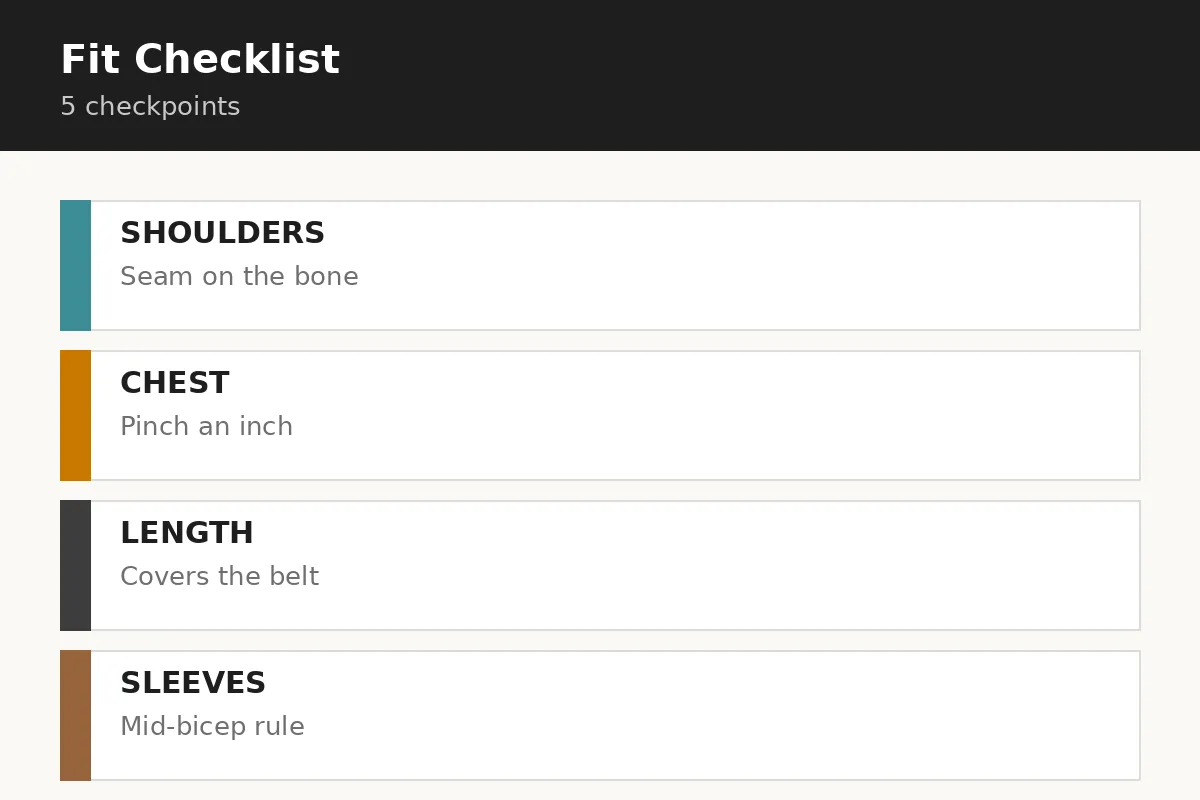
The shoulder seam should sit where your shoulder ends and your arm begins. Drooping down the arm means too big; pulling toward the neck means too small. This is the hardest part to alter, so get it right off the rack. (Deliberate drop-shoulder designs are the exception — judge them by their own intended silhouette.)
2. Sleeves
Classic fit: sleeves end mid-bicep, following the arm's curve without flaring into "wings" or squeezing. Shorter sleeves visually lengthen the arms; longer ones suit taller frames.
3. Length
The hem should fall about two inches past your waistband — roughly mid-fly. It must cover your torso when you raise your arms, without reaching nightgown territory. Too-long shirts visually shorten the legs.
4. Torso
Pinch test: you should be able to gather roughly one to two inches of fabric at each side of your waist. More and you're swimming; less and the shirt is straining. A slight taper from chest to waist flatters most frames.
5. Neckline
It should lie flat against the collarbone without gaping, choking, or rippling. A stretched, wavy collar ruins the whole shirt — check the ribbing quality before you buy.
Matching Fit to Your Body Type
- Lean/slim builds: avoid aggressive slim fits that look skeletal and oversized cuts that swallow you. Modern or tailored fits in heavier fabrics add perceived structure.
- Athletic/V-taper builds: cotton-elastane stretch blends accommodate the chest-to-waist drop; higher armholes prevent bunching. Muscle fits work only if the stretch is genuine.
- Broad/rounder builds: classic or straight cuts give a clean vertical line without clinging. Darker colors and matte fabrics are the most forgiving; avoid slim fits.
- Tall frames: watch the length — standard cuts can ride up. "Tall" sizes add length, but check they don't overcompensate and shorten the legs visually.
- Shorter frames: shorter sleeves and hems keep proportions clean; avoid long, boxy cuts that compress your silhouette.
How Fabric Dictates Drape
The same size in different fabrics fits differently:
- Heavyweight (200+ GSM): structured, boxy, architectural. Hides imperfections because the fabric doesn't break over curves. Holds its shape wash after wash.
- Midweight (150-200 GSM): the everyday sweet spot — enough body to drape cleanly, light enough for comfort.
- Lightweight (120-150 GSM): soft, fluid, follows the body's lines closely. Unforgiving on fit issues — every wrinkle and pull shows.
- Stretch blends (cotton-elastane): hug and recover; the most forgiving option for athletic builds, but they highlight rather than hide.
When trying on, judge the fit in the fabric weight you'll actually wear — a fit that works in heavyweight cotton may not work in tissue jersey.
Fit Types Compared
- Slim fit: close through chest, waist, and sleeves. Polished under layers; restrictive and unforgiving if sized wrong. Best for lean to athletic builds.
- Classic/regular fit: comfortable, timeless, high mobility. The safest default for everyday wear across body types.
- Relaxed fit: extra room through the body without the fashion statement of oversized. Forgiving and easy — good for lounging and broader frames.
- Oversized/boxy: a deliberate fashion silhouette — wide body, often cropped or dropped shoulders. Great for streetwear; looks sloppy when it's just the wrong size. See our oversized styling guide for how to wear it intentionally.
- Muscle fit: maximum definition via stretch and short sleeves. Works for high-muscle builds; on anyone else it reads as too tight.
Common Pitfalls to Avoid
- Buying aspiration sizes: the "motivation shirt" one size down never motivates — it just sits unworn. Fit today's body.
- Ignoring the neckband: a bacon neck (stretched, wavy collar) ruins even premium shirts. Check for cover-stitched necklines or elastane in the ribbing.
- Judging fit in the mirror only: sit down, raise your arms, bend over. A shirt that only fits while you're standing at attention doesn't fit.
- Forgetting shrinkage: unwashed 100% cotton can shrink noticeably. If between sizes, size up — you can shrink a loose shirt, but you can't un-shrink a tight one.
- One brand, one size thinking: vanity sizing means your "medium" varies wildly. Check measurements, not letters.
Fit for Online Shopping: The No-Try-On System
Most tees are bought online now, which means fitting without trying on. Here's the system:
- Measure a shirt you love: lay your best-fitting tee flat and measure pit-to-pit (chest), shoulder seam to shoulder seam, sleeve length, and total length. These four numbers are your personal size chart.
- Compare against the brand's garment measurements — not their S/M/L labels. Reputable sellers publish flat measurements; if they don't, that's a red flag.
- Read reviews for fit intelligence: filter for reviewers near your height and weight. Comments like "sleeves run long" or "shrinks a full size" are worth more than the size chart.
- Check the fabric composition first: 100% cotton will shrink; cotton-poly won't; the same "large" fits differently in each.
- Order two sizes when uncertain and return one — cheaper than keeping a shirt you'll never wear.
Fit Across Necklines
Fit rules shift slightly by neckline:
- Crew neck: the standard — all five checkpoints apply exactly as described. The neckline should sit flat and snug.
- V-neck: the V should end well above the sternum for a classic look; the shoulders and torso follow the same rules, but a V that's too deep throws off the whole silhouette. Our V-neck guide covers depth in detail.
- Henley: the placket should lie flat without gaping; buttons straining means size up regardless of how the body fits.
- Scoop neck: the wider neckline means the shoulder seams carry more visual weight — make sure they're exactly placed, or the shirt looks sloppy.
Maintenance: Keeping the Fit After the Wash
- Wash cold, inside out: heat breaks down fibers and fades color; inside-out washing prevents pilling on the visible surface.
- Air dry when possible: high-heat drying is the top cause of shrinkage in cotton tees. Low heat or air-fluff if you must machine-dry.
- Reshape damp: smooth the shoulders and hem flat while the shirt is damp to set the shape as it dries.
- Rotate your tees: wearing the same shirt daily stretches it out faster. A small rotation keeps every shirt's fit fresher longer.
The 60-Second Fit Checklist
Pin this mental checklist for every t-shirt you try on — in store or from a delivery box:
- Shoulders: seam at the shoulder bone. Non-negotiable.
- Sleeves: mid-bicep, following the arm without flaring or squeezing.
- Torso: one to two inches of pinchable fabric per side.
- Length: two inches past the waistband, roughly mid-fly.
- Neckline: flat against the collarbone, no gaping or rippling.
- Movement: raise your arms, sit down, twist. The shirt should move with you, not against you.
Six checks, sixty seconds, and you'll never again wonder in the fitting room whether something "kind of" fits. It either passes or it goes back.
When to Break the Rules
Fit rules are defaults, not laws. Break them deliberately:
- Oversized on purpose: streetwear, sleep shirts, and beach cover-ups are meant to drape. The key word is purpose — an oversized tee styled with intention looks fashion-forward; the same tee worn by accident looks sloppy.
- Cropped cuts: intentionally short hems break the length rule by design. Balance them with high-waisted bottoms.
- Muscle tanks and stringers: built to show the physique — the torso rules relax, but the shoulder and neckline checkpoints still matter.
- Vintage and thrifted: old tees have their own cuts — boxier bodies, shorter sleeves. Judge them against the era's silhouette, then decide if the look works for you rather than forcing modern rules onto them.
The through-line: know the rule first, then break it on purpose. That's the difference between style and accident.
Frequently Asked Questions
How do I know if a t-shirt is too small?
Horizontal stress lines across the chest, armholes digging into your armpits, or a hem that rides above the waistline when you raise your arms all signal too small.
What's the difference between tailored and slim fit?
Slim fit is narrow through the chest, waist, and sleeves. Tailored fit keeps a standard chest but tapers at the waist — often better for broad shoulders with a narrower waist.
Should I size up for 100% cotton shirts?
If the shirt isn't pre-shrunk, expect some shrinkage in the first washes. Between sizes, go up — a slightly loose cotton shirt can be shrunk intentionally; a too-small one is a lost cause.
Does sleeve length matter for height?
Yes. Shorter sleeves make arms look longer and can make you appear taller; long sleeves on a shorter frame can look stunted. Match sleeve length to your proportions, not just the size tag.
How much fabric should I be able to pinch at the waist?
About one to two inches on each side. More suggests the shirt is too loose; if you can't pinch any, it's too tight.
Ready to put fit knowledge into practice? Browse the designs collection and pair this guide with our V-neck fit guide.