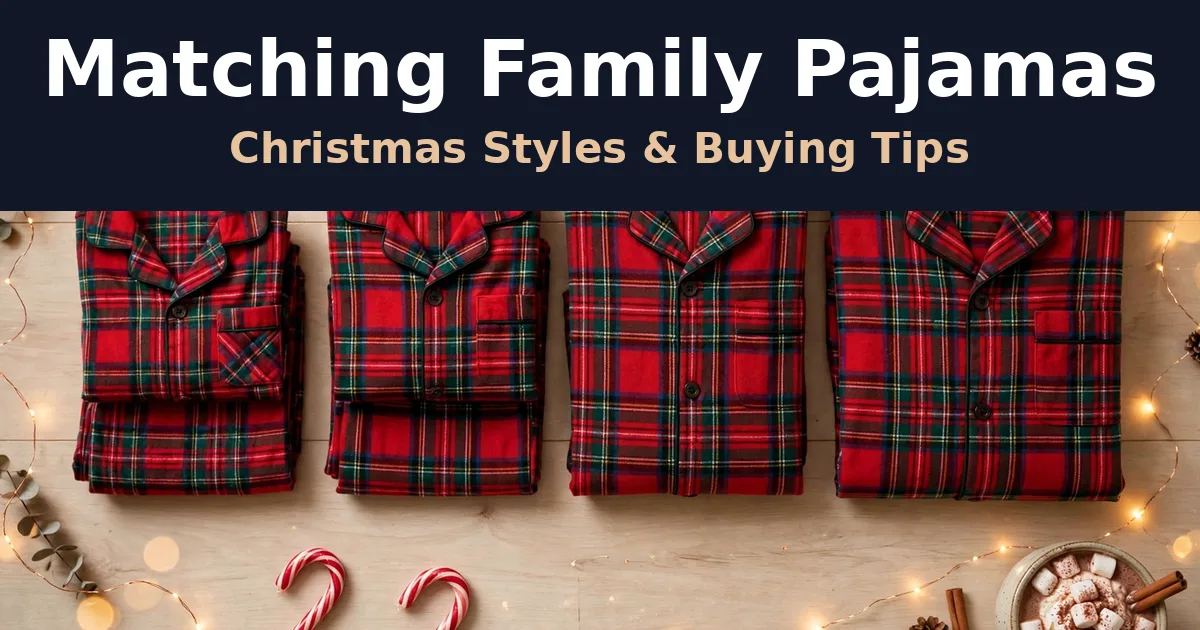
Matching family Christmas pajamas turn an ordinary morning into a small ceremony: everyone comes downstairs in the same print and colours, and the photographs practically take themselves. The trick is choosing a set the whole family will enjoy wearing, in sizes that fit on Christmas morning rather than on the day you ordered them.
Table of Contents
- Why Matching Pajamas Became the Christmas-Morning Tradition
- Style Families: From Classic Plaid to Minimalist
- Sizing the Whole Family, Including Pets
- Fabric and Warmth: Flannel, Cotton, Fleece and More
- The Christmas-Morning Photo Playbook
- The Buying Timeline
- Care and Wearing Them Beyond Christmas
- Frequently Asked Questions
Why Matching Pajamas Became the Christmas-Morning Tradition
Matching pajamas work because Christmas morning is already a shared ritual: the tree, the stockings, breakfast, and the slow unwrapping of presents. A matching set gives that ritual a visual signature, and years later the photographs are easy to recognise at a glance. The set itself often becomes a keepsake, brought out again for movie nights in January.
They also solve a practical problem: nobody has to decide what to wear, especially when the set arrives as a Christmas Eve gift. None of this requires identical outfits — the tradition is about coordination, not uniformity.
Style Families: From Classic Plaid to Minimalist
Start with a style family rather than a single print. It narrows hundreds of options to a look your household will agree on, and it makes finding an alternative easier when one size or cut is unavailable.
Classic plaid
Red, green, navy, or black-and-white plaid is the most forgiving choice for photographs. The pattern reads clearly from across the room, suits every age, and pairs naturally with a decorated tree. It is also the easiest pattern to extend with matching socks, a throw, or a dog bandana.
Novelty prints
Reindeer, snowmen, candy canes, and Christmas trees are the playful option, and children usually love them most. The key is scale: a small, repeated motif photographs more calmly than one oversized graphic across the chest. Novelty prints also tend to feel most tied to December, so consider whether you want a set for Christmas morning only or one you will keep wearing through winter.
Coordinated rather than identical
A coordinated approach — one shared colour family, with different prints or cuts inside it — can look more polished than identical sets. One person might wear a button-up top and trousers, another a nightdress, and a child a footed sleeper, all in the same red-and-cream palette. Shortlist two or three options, let the family vote, and agree on deal-breakers early, such as hoods and fabrics anyone finds irritating.
Sizing the Whole Family, Including Pets
Sizing is where most matching-pajama plans go wrong, because one label rarely means the same thing across babies, children, adults, and pets. Always check the size chart for the specific set you are buying rather than assuming a size carries over from another brand.
Adults
Start from current measurements — chest, waist, hip, and inseam — and compare them with the chart, not with the size usually worn in everyday clothes. Some pajamas are cut as a relaxed, roomy fit, while others are cut close to the body. If someone falls between two sizes, the roomier option is usually better for sleepwear. Tall family members should check trouser length in particular, as matching sets are often cut to a standard inseam.
Children and babies
Children grow between autumn and Christmas, so size for the child they will be in December, not in October. When a child is close to the top of a size range, going up one size is usually wise: a slightly roomy pair is comfortable, and it may still fit next winter. Baby sizes are usually given in months, so size for Christmas week and consider a zip front for night changes. Avoid loose decorative trims, buttons, or ties on sleepwear for babies and toddlers.
Pets
Pet sizing is the least standardised part of the order, so never guess from weight or a generic small, medium, or large label. Measure the chest at its widest point and the back length from the base of the neck to the base of the tail, then compare both figures with the chart. Try the outfit briefly a few days before Christmas: relaxed movement is a good sign, while freezing in place or chewing at the garment suggests the fit is not working. In that case, a matching bandana in the same print gives the coordinated look without the discomfort of a full outfit, and heavily coated breeds may overheat in a thick set indoors. If you want more ideas for coordinating the whole family, see our guide to Christmas shirts for the family.
Before ordering, write one list with every person's measurements, chosen size, and preferred cut, to avoid discovering a wrong size only on Christmas Eve.
Fabric and Warmth: Flannel, Cotton, Fleece and More
The right fabric depends less on the print than on your house, your climate, and how each person sleeps. A set that feels cosy in a cold house can feel stifling in a centrally heated flat.
Flannel, cotton jersey, and fleece
Brushed cotton flannel is warm, soft, and the classic cold-weather choice, but in a well-heated home, or for someone who sleeps hot, it can become uncomfortable by mid-morning. Lightweight cotton jersey feels much like a soft T-shirt and is the most breathable everyday option, suiting warm climates, warm houses, and hot sleepers, though it is less insulating in a cold snap. Fleece is the warmest at first touch and children often love it, but it traps heat, so it can lead to overheating indoors, particularly for babies, toddlers, and pets.
Thermal, satin, and modal blends
Thermal or waffle-knit sets offer warmth with more breathability than fleece. Satin and modal blends feel smooth and look polished in photographs, but they are lighter than flannel or fleece, so they suit warmer rooms. When the family disagrees on warmth, the same colour family in different fabrics — flannel for the cold sleeper, jersey for the hot sleeper — keeps photographs unified while everyone stays comfortable.
The Christmas-Morning Photo Playbook
The best Christmas-morning photographs are rarely taken in the chaos of the present-opening itself. Take the group photograph early, before the presents are opened, while the floor is still clear and the light is gentle. Position the group near a large window for soft natural light, which flatters skin tones and shows fabric texture better than harsh overhead lighting. Arrange people by height, with taller family members at the back and others sitting or kneeling in front, so every face is visible. Then set the camera on a timer and take one unposed shot — everyone laughing, sharing breakfast, or opening a first gift — because the candid photograph is often the one families treasure most.
Think about contrast: red plaid photographs crisply against a cream sofa, but can disappear against a red couch or busy backdrop, so keep the background simple. For pets, a dress rehearsal a few days before Christmas is worth the effort. Lay the pajamas out the night before; opening them as a Christmas Eve gift means everyone is ready when the morning begins.
The Buying Timeline
Matching sets are seasonal, and size runs narrow as Christmas approaches. In October, shortlist the style family and gather measurements for everyone, including pets. This is the moment to vote on prints and to decide whether the family wants identical sets or a coordinated colour family, because changing direction later usually means starting the size hunt again. In early to mid-November, place the order, ideally as one order covering the whole family so sizes and prints arrive together.
When the sets arrive, wash one set first, following the care label, to check for shrinkage or colour transfer before the rest are wrapped. By late November, confirm every size has arrived and fits, and keep receipts until after Christmas. If a size has sold out, the coordinated fallback — the same colour family in a different print — is better than a near-match that clashes. For personalised sets, allow extra time and double-check every spelling before checkout.
Care and Wearing Them Beyond Christmas
Wash pajamas inside out in cool water, with a mild detergent, and tumble dry on low heat or hang them to dry. High heat can fade colours, shrink cotton, and shorten the life of a waistband. Wash dark reds and greens separately the first time, and avoid bleach on printed sets. Choosing a winter print — snowflakes or stars rather than a Santa graphic — extends the life of the set well past December.
Frequently Asked Questions
Do matching family Christmas pajamas need to be identical?
No. A shared colour family with different cuts or prints works just as well and is often more comfortable, especially for grandparents and teenagers.
How do I size a child who is growing fast?
Size for the child they will be at Christmas, not the day you order. If they are near the top of a size range, going up one size usually gives a comfortable, roomy fit for lounging and a better chance the set still fits next winter.
What fabric is best for a warm house?
Lightweight cotton jersey or a breathable knit is usually the most comfortable choice in a well-heated home, while flannel and fleece suit colder houses. If the family is split between hot and cold sleepers, choose the same colour family in different fabrics.
How do I measure a dog for matching pajamas?
Measure the chest at its widest point and the back length from the base of the neck to the base of the tail, then compare both figures with the size chart. Do not rely on weight or a generic size label, and try the outfit briefly a few days before Christmas to check comfort.
When should I order matching Christmas pajamas?
Shortlist in October and order in early to mid-November, so there is time to wash-test a set and exchange any wrong sizes before Christmas. Personalised sets need extra lead time, and size runs narrow as December approaches.
Can we wear matching pajamas after Christmas?
Yes, especially if you choose a winter print such as snowflakes or stars rather than a design that only reads as Christmas.