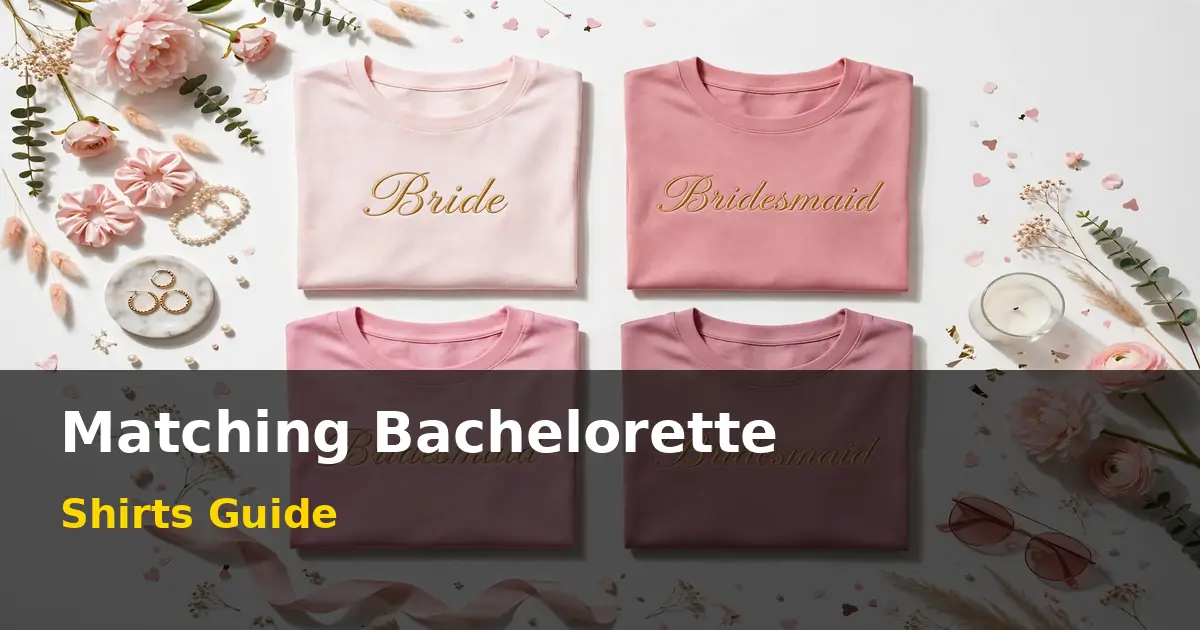
Matching bachelorette shirts look effortless in photos. Behind every one of those photos is a maid of honor who collected eleven sizes, chased down three late payments, and mediated at least one argument about fonts. This guide is for her — and for any bride who wants the coordinated look without the group-chat chaos. Below: why matching works, the three design approaches, a sizing system that actually works for mixed groups, ordering timelines, and what to do when someone refuses to wear the shirt.
Table of Contents
Why Matching Shirts Work
Strip away the cliché and matching shirts do three practical jobs. First, identification: in a crowded bar or festival, a coordinated color makes your group findable. You can spot your people across a room, which matters when the plan involves twelve women, three venues, and one night. Second, photos: matching or coordinated tops turn a random group shot into a deliberate one — the kind that ends up framed. Third, belonging: putting on the same shirt is a small ritual that marks the weekend as an event, especially for guests who flew in and barely know each other.
None of that requires everyone to look identical. The groups that pull it off best treat "matching" as a spectrum, not a uniform — which is exactly what the next section covers. For trend and fabric ideas beyond the planning mechanics, see our bachelorette party shirt ideas guide.
Three Design Approaches
1. Identical shirts for everyone
Same design, same color, same placement. The classic "Bride Tribe" tee. This is the simplest to order — one design file, one color, just sizes to collect — and it photographs the cleanest. The trade-off is individuality: nobody stands out, including the bride. Works best for large groups (10+) where simplicity beats customization, and for matching design collections where you pick one graphic everyone likes.
2. Role-based designs
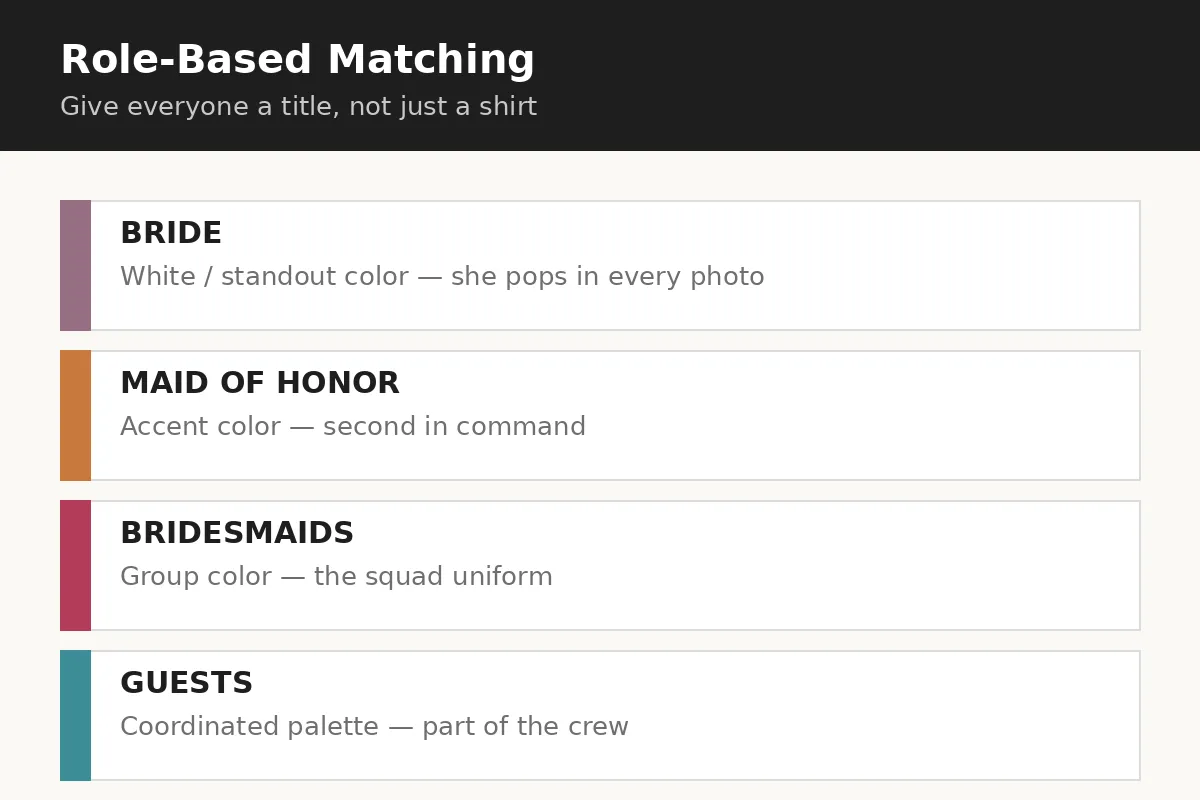
Same visual identity, different titles: the bride wears "Bride," the maid of honor wears "Maid of Honor," everyone else wears "Bridesmaid" (or "Bride Tribe"). The design, font, and color stay consistent so the group reads as one unit, but the roles are legible in photos. This is the most popular approach for a reason — it flatters the hierarchy without making anyone feel like background. Planning note: role-based designs mean multiple print files, so confirm with your printer that each variant is proofed separately. A typo in one bridesmaid's title is the classic failure mode.
3. Coordinated, not identical
Same color palette and theme, different garments or designs. The bride wears a white "Bride" tee; the crew wears dusty rose tanks, or everyone picks their own fit from the same design. This is the answer for groups with strong opinions about necklines and sleeve lengths — and for mixed groups where a unisex tee fits nobody well. It takes more coordination (a shared color code, not a shared cart), but the re-wear rate is far higher: people keep shirts they actually chose.
Which to pick? Large group, tight timeline, low drama tolerance → identical. Medium group that wants the classic look → role-based. Fashion-conscious group with opinions → coordinated. There is no wrong answer, only a mismatch between the approach and the group's personality.
Sizing a Whole Group Without Tears
Sizing is where matching-shirt plans die. Here is the system that works:
- One owner, one spreadsheet. The maid of honor (or whoever volunteers) owns a shared sheet with three columns: name, size, and "measured against what." Everyone fills in their own row. No guessing other people's sizes — ever.
- Measure against a real shirt. Ask each person to measure a shirt they already own and like: lay it flat, measure armpit to armpit. Then compare against the vendor's size chart, which lists the same measurement. T-shirt sizes are not standardized; a "Medium" from one blank manufacturer can be an inch wider than another's.
- Remember that "unisex" usually means men's sizing. A unisex Large on a woman who wears a women's Large will be long and boxy. When in doubt between two sizes on a unisex blank, most women prefer sizing down for a closer fit or keeping their usual size for the relaxed look — ask, don't assume.
- Order one spare. For groups of 8+, order one extra in the most common size. Someone's size will change, someone will spill, someone will forget theirs at the hotel. A spare costs less than a rush reprint.
- Collect payment before ordering. Not after. The shirts get ordered when the money is in, not when twelve people have said "yeah I'll Venmo you." Set a deadline a week before your order date.
The Ordering Timeline
Work backwards from the trip:
- 8 weeks out: Finalize the design approach and collect the group's input on colors. One decision-maker approves the final design — design by committee produces nothing.
- 6 weeks out: Open the size spreadsheet with a hard deadline. Chase stragglers once, then order with what you have (plus the spare).
- 5 weeks out: Place the order. Ask for a digital proof and check every word, especially names and titles on role-based designs. Proofing is the step everyone skips and everyone regrets skipping.
- 2 weeks out: Shirts should be in hand. Try them on, wash once if the fabric needs softening, and pack.
- Under 2 weeks: You are in rush territory. Rush fees exist and express shipping is not a guarantee — some printers simply cannot turn custom work around that fast. If you are here, simplify: one color, one design, no personalization.
The single most common planning failure is treating custom shirts like Amazon orders. They are made after you order them. Build the buffer in.
Handling the Dissenters
Every group has one: the bridesmaid who hates matching shirts, the one with sensory issues about certain fabrics, the one who "doesn't do pink." Plan for her instead of fighting her:
- Offer the coordinated option. Let her wear the palette in her own garment — same color family, her choice of fit. She stays in the photos without wearing something she hates.
- Ask what the actual objection is. Often it is fit, not the concept. A boxy unisex tee on a petite frame looks and feels bad; a fitted women's cut in the same design solves it.
- Do not make it a vote. The bride (or MOH) decides the approach. Put it to a group vote and you will get twelve opinions and no shirts.
- Keep one tradition sacred. If the whole group coordinates except one person, the photos still work. If half the group opts out, the concept is dead — so secure buy-in on the approach early, and be flexible on the execution.
Photo Tips for Matching Groups
- Mid-tone colors photograph best. Sage, dusty blue, terracotta, and champagne hold detail in both sunlight and evening light. Pure white can blow out in bright sun; black loses the print detail at night.
- Steam, don't iron the print. If shirts arrive wrinkled, steam around the graphic or iron inside-out. Direct heat on the print is how designs crack before the trip even starts.
- Coordinate bottoms loosely. You do not need matching jeans, but a shared direction (everyone in denim, everyone in black bottoms) keeps the group shot cohesive.
- Take the photo early in the night. Matching shirts look their best in the first two hours. Plan the group photo before dinner, not after the third venue.
Looking for designs with actual personality instead of another generic "Bride Tribe" tee? Browse our designs collection — the planning rules above apply to any graphic you choose.
Frequently Asked Questions
How far in advance should we order matching bachelorette shirts?
Start the process 8 weeks out and place the order no later than 5–6 weeks before the trip. Custom shirts are made after you order them, so you need production time plus a buffer for wrong sizes or misprints. Under 2 weeks, expect rush fees — or simplify to in-stock designs.
Should the bride wear a different shirt than the group?
The most common setup is the bride in white (or a distinct "Bride" design) with the group in a coordinating color. It makes her identifiable in photos and in crowded venues. Some groups go tonal — everyone in different shades of one color — which looks modern and still cohesive.
How do we collect sizes without drama?
One shared spreadsheet, filled in by each person themselves, measured against a shirt they own (armpit to armpit, compared to the vendor's size chart). Never guess someone else's size. Remember "unisex" blanks generally follow men's sizing.
What if a bridesmaid refuses to wear the matching shirt?
Offer the coordinated compromise: same color palette, her choice of garment. Often the objection is fit rather than the concept, so a different cut in the same design solves it. Decide the approach by authority (bride or MOH), not by group vote.
Who pays for bachelorette party shirts?
There is no single rule: sometimes the group splits the cost (excluding the bride), sometimes the bride gifts them as a thank-you. Decide and communicate it upfront, and collect payment before placing the order — not after.