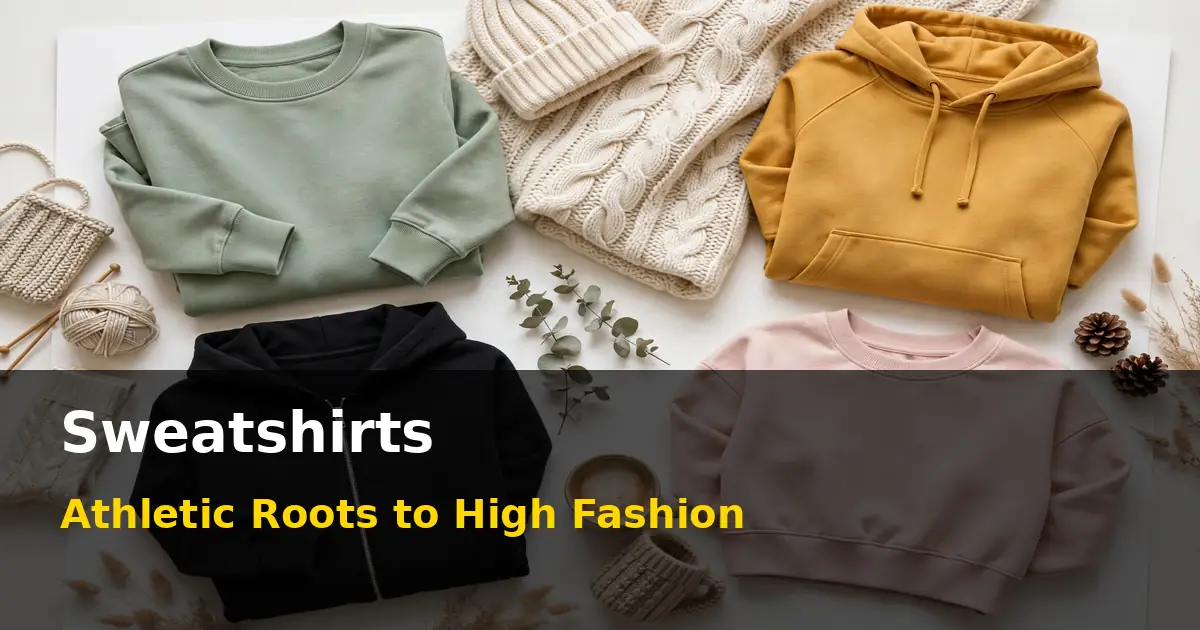
Few garments have traveled as far as the sweatshirt: born as 1920s athletic equipment, adopted by mid-century campuses, absorbed by hip-hop and skate culture, and now fully at home on runways. This guide covers the history that shaped it, the types worth knowing, how to judge quality before buying, and how to style a sweatshirt for more than the couch.
Table of Contents
A Short History
The sweatshirt was born from an athlete's complaint. In the early 1920s, football player Benjamin Russell Jr. was tired of chafing in wool jerseys and asked his father — a clothing manufacturer — for an all-cotton alternative. The result was a collarless, loose pullover that absorbed sweat: the first sweatshirt.
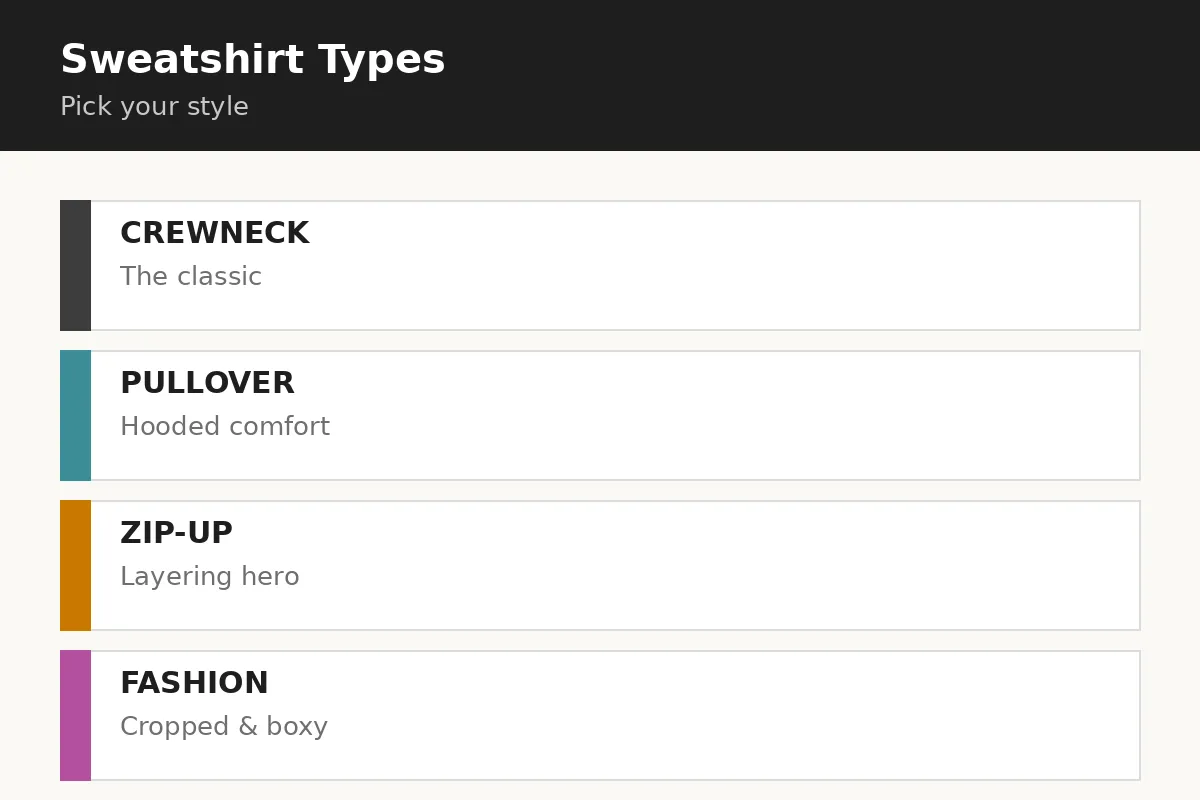
From there the arc is familiar, and each era left a design fingerprint. The 1960s campus era turned the sweatshirt into a canvas: university names arched across the chest in collegiate lettering, a look that still defines the classic crewneck. The 1970s–80s fitness craze brought the sweatshirt into gyms and music videos, often cropped or cut, in bright colors. Hip-hop and skate culture then claimed it — oversized fits, bold graphics, and the hoodie as uniform — before 2010s luxury houses elevated the same silhouette with premium fabrics and four-figure price tags.
Knowing this history helps when you shop — the heritage details (V-stitch, loopback cotton, ribbed gussets) that collectors prize are the same details that mark a well-made sweatshirt today.
Sweatshirt vs. Hoodie vs. Sweater
The terms get mixed up constantly. Here's the clean distinction:
- Sweatshirt: the family name — a collarless pullover in heavy knit cotton or cotton blend. Includes crewnecks and hoodies.
- Hoodie: a sweatshirt with a hood (and usually a kangaroo pocket). Sportier, more casual, better weather protection.
- Sweater: a knitted garment (not a sweat-knit), usually finer gauge, often in wool or cashmere blends. Dressier, less wash-and-wear durable than a sweatshirt.
Rule of thumb: choose the sweatshirt when you want durability and easy care, the hoodie when you want coverage and streetwear attitude, and the sweater when the occasion calls for something more refined.
The Main Types
The silhouette hasn't changed much in a century, but the variations matter:
- Classic crewneck: the original — round ribbed neckline, no hood. The most versatile: clean enough to layer under a collared shirt, casual enough for weekends.
- Hoodie (pullover): a sweatshirt with a hood and usually a kangaroo pocket. The king of streetwear; extra coverage and a more relaxed read. See our printed hoodie guide for buying and customizing.
- Zip-up: full-zip versions function like a casual jacket and layer easily; quarter-zips (half-zip at the neck) read slightly more structured and preppy.
- Oversized / drop-shoulder: seams sit below the natural shoulder for a boxy, relaxed silhouette — the contemporary fashion default. Balance the volume with tapered bottoms.
- Graphic sweatshirt: any of the above carrying printed or embroidered artwork — the statement piece of the category.
Anatomy of a Quality Sweatshirt
Before you buy, check the construction details that separate a five-year sweatshirt from a five-month one:
- The V-stitch ("dorito"): the triangular ribbed insert at the neckline. Originally functional (it absorbed sweat and kept the collar from stretching); today it's a heritage marker of traditional craftsmanship.
- Ribbed cuffs and hem: high-density ribbing keeps the shape and blocks drafts. Double-needle stitching here is a durability tell.
- Weight (GSM): 200–250 GSM is lightweight and layerable; 300–350 is the versatile midweight standard; 400+ is heavyweight — warm, structured, and long-lasting.
- Shoulder seams: reinforced or taped shoulder seams resist stretching on the hanger — a detail cheap sweatshirts skip.

"Thankful" Typography Sweatshirt
A clean typographic design in the classic sweatshirt tradition — the kind of simple, readable graphic that suits a crewneck's uncluttered front. Available on Redbubble; pick the sweatshirt garment on the product page.
View on Redbubble →Fabrics: Beyond Basic Cotton
- French terry (loopback): smooth outside, looped pile inside. Absorbent, breathable, lighter than fleece — the transitional-weather pick and a hallmark of premium construction.
- Fleece-backed cotton: the loops are brushed into a soft, heat-trapping fuzz. Maximum coziness; lower-quality cotton can pill, so check reviews for that.
- Cotton-poly blends: a 20–30% polyester share reduces shrinking, holds color, and resists wrinkles. 100% cotton remains the breathability champion but needs pre-shrinking to hold its fit.
- Ring-spun cotton: smoother, stronger fibers that take print detail better and feel softer than coarse open-end cotton.
Seasonal Fabric Picks
Match the fabric to the calendar and you'll never be the person sweating through October or shivering in January:
- Spring: lightweight French terry (200–250 GSM). Breathable enough for mild days, structured enough to look finished over a tee.
- Summer evenings: the same lightweight terry, or a fine-gauge cotton crewneck. The sweatshirt becomes a layering piece, not insulation.
- Fall: midweight fleece (300–350 GSM). This is peak sweatshirt season — the fabric has enough body to wear solo with jeans and boots.
- Winter: heavyweight brushed fleece (400+ GSM), ideally layered under a coat. Look for a high collar or quarter-zip to seal warmth at the neck.
One midweight and one heavyweight sweatshirt cover roughly 90% of the year for most climates — buy those two well rather than five thin ones.
Buying Checklist
Run through this before checkout:
- Match the weight to the season — midweight for year-round, heavyweight for winter, lightweight for layering.
- Measure, don't guess — compare chest width and body length against a sweatshirt you already like; size labels aren't consistent across brands.
- Check the blend and GSM in the product details, not the marketing copy.
- Look for the construction tells — V-stitch, ribbed cuffs, reinforced shoulders.
- Read the care label first — if it demands delicate handling you're not willing to give, pick a different one.
- Browse real designs — the AIPrintVerse design collection has original artwork made for exactly this kind of garment.
Styling Ideas
- Quiet luxury: slim-fit crewneck in camel, navy, or charcoal with tailored trousers and loafers. Fit is everything — snug enough to look deliberate.
- Weekend explorer: heavyweight hoodie or crew in olive or rust under a denim jacket, with raw denim and boots.
- Athleisure: French-terry sweatshirt with matching joggers, clean sneakers, and a structured overcoat so it reads styled, not slept-in.
- Smart layer: crewneck over a button-down shirt with chinos — the collar peeking out upgrades the whole outfit for relaxed offices.
- Monochrome minimal: sweatshirt, trousers, and sneakers all in neighboring neutrals (charcoal, grey, off-white). Texture differences — terry against twill — keep it from looking flat.
- Heritage weekend: a V-stitch heritage crewneck with selvedge denim and leather boots. The vintage details do the talking; keep everything else simple.
Fit notes that matter
- Shoulder seams should sit at or just past your natural shoulder — drooping halfway down the arm means it's too big, not "oversized."
- Sleeve length should end at the wrist bone; bunching halfway up the forearm looks accidental.
- Body length should cover the waistband with a little to spare. If it hangs past mid-thigh on a non-oversized cut, size down.
Care
- Inside out, cold water: protects the outer face from pilling and any graphics from friction.
- Skip the dryer: heat shrinks cotton and breaks down elastic fibers; lay flat to dry to hold the shape.
- No fabric softener on French terry: it coats the fibers and kills the absorbency that makes loopback cotton special.
- De-pill as needed: a fabric comb keeps older sweatshirts looking fresh without damaging the knit.
- Rotate your wear: knit fabrics recover their shape with rest. Alternating between two sweatshirts instead of wearing one daily noticeably extends both.
The Two-Sweatshirt Wardrobe
If you're building from scratch, two well-chosen sweatshirts cover nearly everything: one midweight crewneck in a neutral (navy, charcoal, or oatmeal) for layering, smart-casual duty, and year-round wear; and one heavyweight hoodie in an earthy tone (olive, rust, or black) for cold weather, weekends, and travel. Buy both in fabrics you'd be happy to wear for a decade — ring-spun cotton or a quality cotton-poly blend, with the construction details from the anatomy section — and you've solved the category. Everything after that is a want, not a need.
Frequently Asked Questions
What is the difference between a sweatshirt and a hoodie?
A hoodie is a type of sweatshirt — one with a hood (and usually a kangaroo pocket). "Sweatshirt" most often means the classic collarless crewneck pullover.
How do I keep a sweatshirt from pilling?
Wash inside out on a gentle cold cycle, avoid washing with rough fabrics like denim or towels, and air dry. Higher-quality cotton pills less to begin with.
Can I wear a sweatshirt to a business-casual office?
Yes, styled right: a solid, fine-gauge crewneck over a button-down shirt with chinos or tailored trousers reads polished while staying comfortable. Skip graphics and hoods for the office.
What does GSM mean on a sweatshirt?
Grams per square meter — the fabric's weight and density. Higher GSM means thicker, warmer, usually more durable fabric: 200–250 is lightweight, 300–350 midweight, 400+ heavyweight.
What is the V-stitch on a sweatshirt neckline?
The triangular ribbed insert below the collar — originally designed to absorb sweat and keep the neck from stretching. Today it's mostly a heritage design detail on quality sweatshirts.