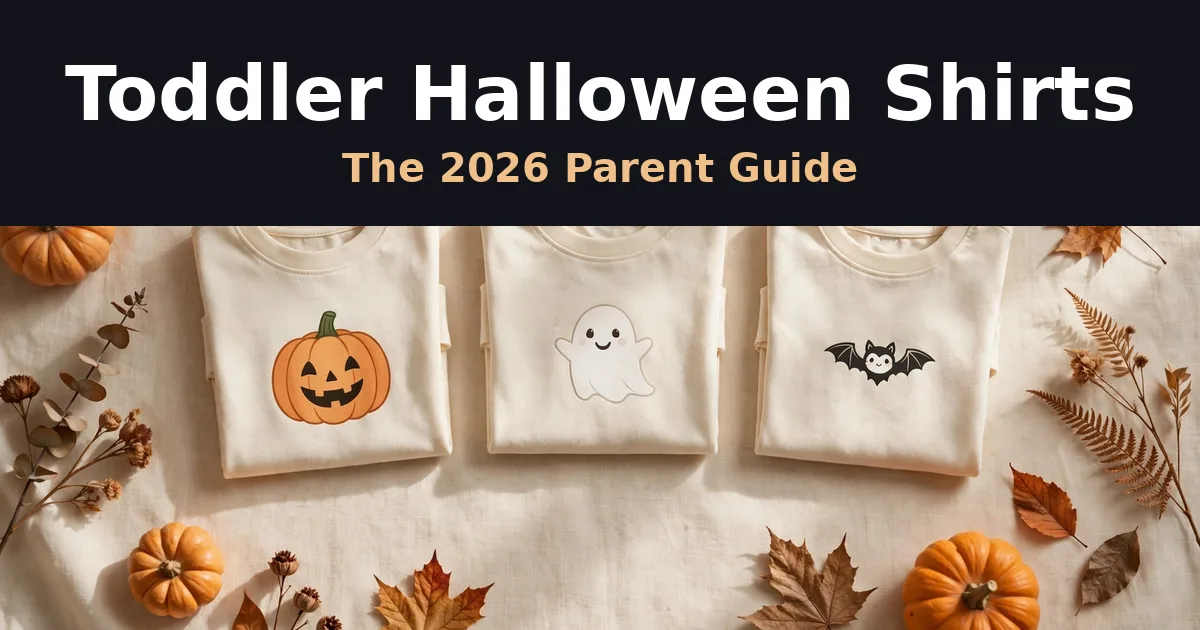
A toddler Halloween shirt is the rare garment that has to do three jobs at once: survive a child who treats clothing as optional, photograph well enough for the grandparents, and not irritate skin that reacts to everything. Get those three right and a ten-dollar tee becomes the easiest Halloween win of the season — no costume assembly, no face paint negotiations, no 7pm meltdown over an itchy mask. This guide covers fit by age, the safety and comfort rules that actually matter, theme ideas kids genuinely love, and the ordering timeline that keeps you out of the October shipping crunch.
Table of Contents
Fit by Age: Bodysuits to Big-Kid Tees
Kids' Halloween shirts aren't one product — they're three, and the right choice depends entirely on the age bracket:
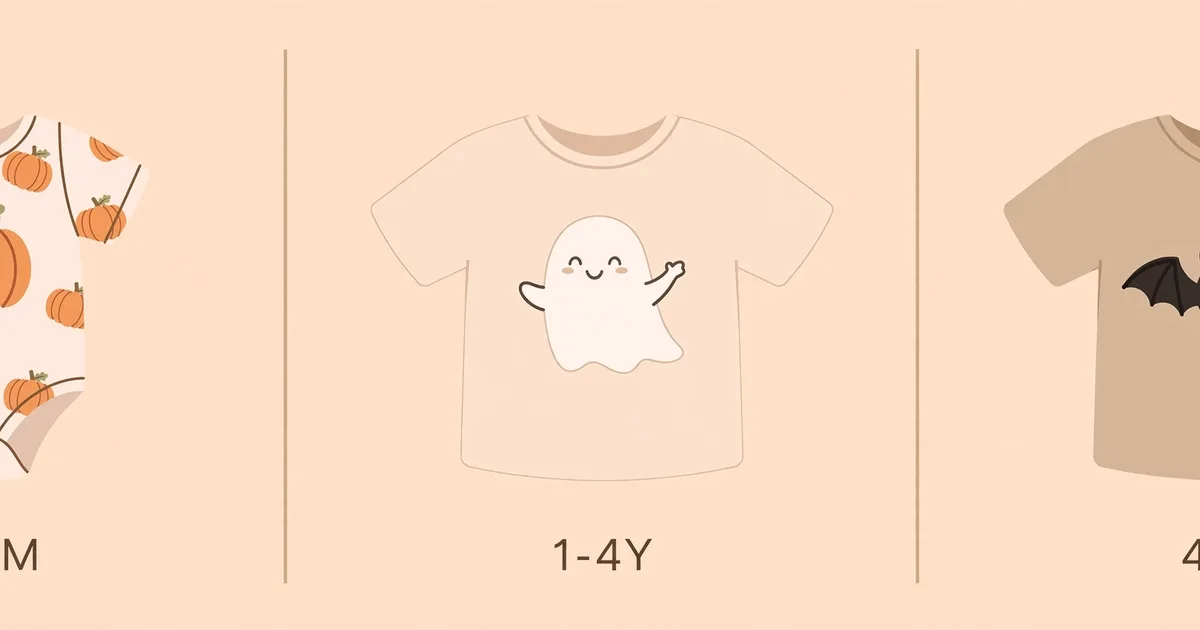
Babies (0–12 months): bodysuits. A Halloween bodysuit is the whole outfit — snap closures at the bottom make diaper changes survivable, and the one-piece format means nothing rides up during tummy time. Look for envelope necklines (the kind that pull down over the shoulders) which make blowout changes dramatically less traumatic. "My first Halloween" text designs are the classic here, and they photograph beautifully even if the baby sleeps through the entire holiday.
Toddlers (1–4 years): tees. This is the golden age of the Halloween shirt: the child is mobile enough to show it off and young enough to wear whatever you pick. Prioritize tagless necks and flat seams — toddlers will find and fixate on a single scratchy seam with the focus of a detective. Short sleeves work for indoor parties; for trick-or-treating, plan a long-sleeve layer underneath.
Little kids (4–8 years): tees with opinions. At this age the child has preferences, and a shirt they picked themselves gets worn three times as often as one chosen for them. Narrow the options to two or three parent-approved designs and let them choose — you keep veto power, they keep autonomy. This is also the age where glow-in-the-dark prints become a genuine thrill rather than a gimmick.
Safety & Comfort Rules
Kids' clothing has failure modes adult shirts don't. Run every candidate through this checklist before buying:
No small detachable parts. Buttons, glued-on googly eyes, dangling charms — anything a toddler can work loose goes straight into the mouth. Printed designs only for under-threes; save the 3D embellishments for older kids.
Soft, breathable fabric. Cotton or cotton blends are the safe default for sensitive skin. Avoid stiff, plasticky-feeling prints on the inside of the shirt — a heavy print plate against the chest is the most common reason a toddler demands a shirt come off within the hour.
Flat seams and tagless necks. Raised seams and scratchy tags cause a surprising amount of drama. If the shirt has a printed size tag instead of a sewn one, that's a good sign the maker thought about kids.
Easy on, easy off. Wide necklines or snap shoulders for babies; nothing that has to be yanked over the ears for toddlers. Diaper changes in a Halloween bodysuit happen at least twice on party day — snap placement matters more than the graphic.
Flame awareness for sleep-adjacent wear. If the shirt doubles as pajamas on Halloween night, check that it meets children's sleepwear standards in your country — snug-fitting cotton is generally the compliant choice; loose synthetics often aren't.
Visibility for trick-or-treat night. Dark Halloween shirts look great and disappear completely after sunset. If the shirt is the costume, add reflective tape strips or glow bracelets — visibility gear is non-negotiable for roadside trick-or-treating.
Theme Ideas Kids Actually Love
Themes that test well with the under-eight crowd share one trait: the character is friendly, not frightening. Save the horror-movie references for the adults' shirts.
Friendly ghost. The undefeated champion of toddler Halloween. A smiling ghost reads as "Halloween" instantly and frightens nobody — it's the motif most likely to still be worn in November.
Smiling pumpkin / jack-o'-lantern. The most traditional choice and the easiest to coordinate with siblings. Orange pops in photos against fall backgrounds.
Cute bat. Bats have had a full cute-ification in kids' design — round bodies, big eyes, tiny fangs. A strong pick for kids who want something slightly less common than pumpkins.
Astronaut / space Halloween. "Mission Trick or Treat" style designs — a pumpkin helmet, a rocket among stars — land perfectly with kids in a space phase, and the theme is unisex by default.
Animals in costume. A frog dressed as a ghost, a cat in a witch hat, a dinosaur in a pumpkin suit. Animal-in-costume art is the rare theme that delights toddlers and still charms adults, which makes it ideal for matching sibling sets.
"My first Halloween" milestone. For babies: the dated milestone design becomes a keepsake. Buy the bodysuit one size up if you want it to survive as a hand-me-down with the photo intact.

Mission Trick or Treat Astronaut Tee
An astronaut in a pumpkin helmet — the space-Halloween crossover kids love, with zero scary elements. The bold, simple graphic reads clearly at toddler-shirt scale, where fussy detailed prints turn to mush. Check the product page for the full size range.
View on Redbubble →For families coordinating across ages, our matching family Halloween shirts guide covers how to extend these kid themes to parents and grandparents without anyone feeling ridiculous.
Sizing Without the Guesswork
Kids' sizing is where most Halloween shirt orders go wrong, because children's sizes are even less standardized than adults':
Bodysuits run by months (0–3M through 24M). When between sizes, size up — a slightly roomy bodysuit layers over a warm onesie on cold October nights, while a snug one becomes unwearable after one growth spurt.
Toddler sizes (2T–5T) vs. youth sizes. The "T" sizes assume diapers — they're cut roomier through the seat. Once a child is out of diapers, youth XS often fits better than 5T. If your four-year-old is tall, skip straight to youth sizing.
Measure, don't guess. Lay a well-fitting shirt flat, measure chest width and length, and compare against the seller's chart. Print-on-demand blanks come from different manufacturers, so a "4T" from one seller can be a full inch narrower than another's.
Account for layers. Halloween night is cold in most of the US. If the shirt is the costume, it needs to fit over a thermal base layer — size up one when the shirt will be worn outdoors after dark.
Shrinkage is real. Cotton toddler tees can shrink noticeably in a hot dryer. If you're between sizes and plan to machine-dry, the larger size is the safer bet.
Washing & Care
Kids' Halloween shirts get washed harder than any other graphic tee — food, face paint, pumpkin guts. Protect the print with the same routine every time: turn inside out, cold water, gentle cycle, tumble dry low or line dry. Skip the fabric softener on printed areas; it breaks down plastisol inks faster. A shirt washed this way survives the season looking new and hands down cleanly to the next kid.
Photo Tips
The shirt is half the photo; the other half is timing. Shoot in the morning when toddlers are cooperative — golden-hour light is lovely but toddler mood at 6pm is not. Get down to their eye level rather than shooting from standing height. For the classic shot, sit the child among pumpkins with the graphic fully visible (no arms crossed over the design — every parent has that photo). And take the "detail shot" of just the shirt graphic; it's the one you'll actually frame.
The Ordering Timeline
Work backwards from October 31st — kids' sizes sell out faster than adult sizes in popular designs:
Early September: order personalized or made-to-order kids' designs. The 2T–4T range goes first.
Late September: order standard designs; the full size run is usually still available.
Early October: last comfortable window for standard shipping. Verify the seller's production time — "ships in 3–5 days" plus transit can still mean two weeks.
Mid-October onward: buy in person or pay for expedited shipping, and have a backup plan (a plain orange tee plus a pumpkin sticker works in a pinch).
If the shirt is part of a group costume rather than a standalone outfit, our Halloween costume shirts guide covers the lazy-costume approach that pairs perfectly with a themed tee.
Frequently Asked Questions
What size Halloween shirt does a 2-year-old wear?
Usually 2T, but measure rather than trusting the age label — a tall 2-year-old may need 3T, especially if the shirt will layer over warm clothes on Halloween night. When between sizes, size up.
Are Halloween shirts safe for babies?
Yes, with the right construction: printed (not appliquéd) designs, no small detachable parts, soft breathable fabric, and snap closures for easy changes. Avoid anything with glued-on elements for under-threes.
Should I get a bodysuit or a t-shirt for my 1-year-old?
A bodysuit. At one, shirts ride up constantly and the exposed belly gets cold. The snaps also make diaper changes far easier than pulling a shirt up and down at a party.
How do I keep a toddler's Halloween shirt clean at a party?
You don't, fully — but a bib or smock over the shirt during food, and treating stains the same day, keeps it presentable. Dark-colored shirts hide party damage dramatically better than white ones.
Can older kids wear "scary" Halloween shirt designs?
Follow the child's lead. Some six-year-olds love skeletons; others have nightmares. When in doubt, friendly motifs (smiling ghosts, pumpkins, bats) are the safe default that still reads as Halloween.
Do kids' Halloween shirts shrink?
Cotton ones can, especially in hot dryers. Size up if you're between sizes, wash cold, and tumble dry low to minimize shrinkage and protect the print.