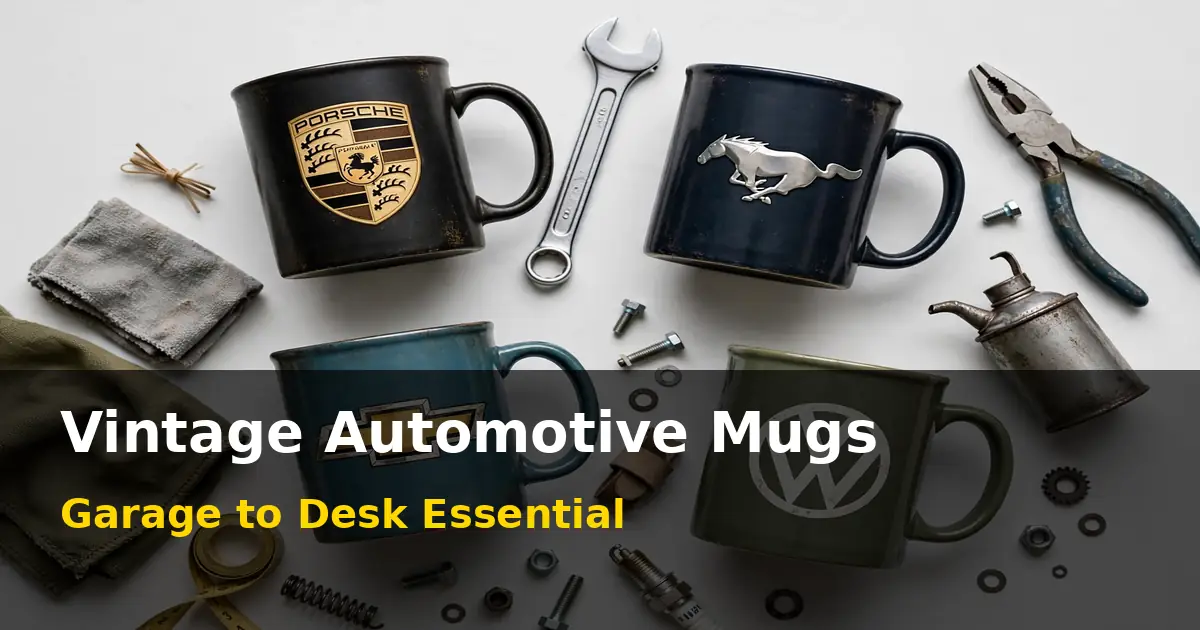
There is a reason the chipped enamel mug with a 1960s oil-company roundel survives every kitchen declutter: it is not really about coffee. Vintage automotive logo mugs trade on petroliana — the visual culture of gas stations, racing liveries, and mid-century car badges — and they work as well on a minimalist desk as on a workbench. This guide covers mug types, how to spot licensed and well-printed designs, and how to keep the print alive.
The search results here are thin AI-generated listicles and product grids. None of them explain the enamel-versus-ceramic tradeoff, what licensing actually signals, or why a patina print peels. That is the gap this guide fills: an honest editorial buying guide to vintage automotive mugs. Whether the mug is headed for a workbench, a campsite, or a minimalist desk, the same buying logic applies — match the vessel to the use, verify the print quality before you commit, and care for it so the logo outlasts the coffee.
Table of Contents
Key Takeaways
- Enamel suits garages and campsites; heavy ceramic suits desks and slow sippers — pick by where the mug will live.
- Licensed reproductions use correct vector logos; look for copyright marks on the base as a quick authenticity signal.
- Spot prints beat wraparounds for clean logos; patina effects should look intentional, not like fading.
- Hand-wash printed mugs and keep metallic or enamel ones out of the microwave.
Why Automotive Logos Work on Mugs
The golden age of automotive graphic design — roughly 1950 to 1975 — produced logos that were hand-drawn art: winged badges, script lettering, racing roundels. On a mug, those marks carry heritage without needing explanation. The appeal has crossed from garages into offices because the aesthetic reads as mid-century industrial design, not just fandom. A Gulf Oil roundel or a Mustang tri-bar works the way a good watch works: it signals taste in a language enthusiasts recognize instantly.
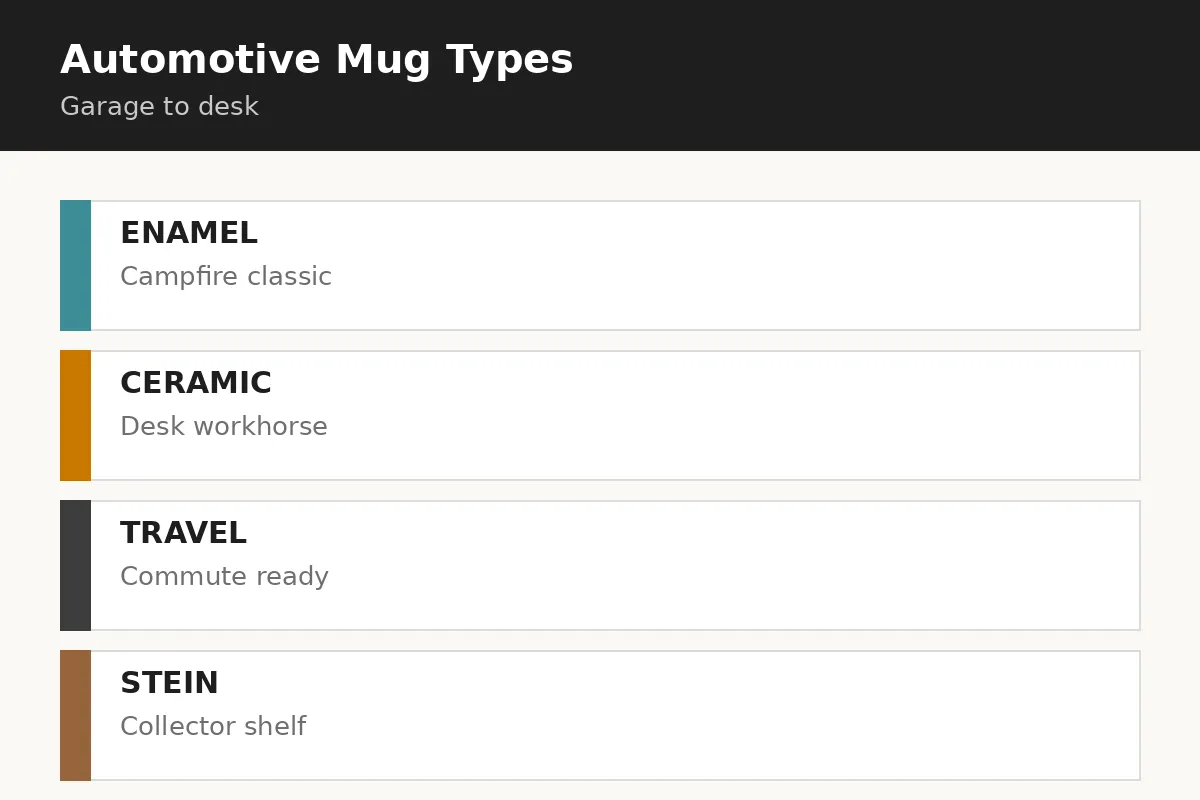
Five Mug Types Compared
Distressed enamel (steel): nearly indestructible, lightweight, the authentic "shop" feel — but hot to the touch and never microwave-safe. Chips add character rather than ruining the piece. Matte black ceramic: logos pop against the dark body; modern and desk-friendly, though it shows fingerprints. Oversized diner mug: thick walls, great heat retention, a 1950s silhouette — heavy in the hand. Insulated travel tumbler: keeps coffee hot for hours and fits cup holders, but loses the tactile vintage soul. Novelty "oil can" tins: conversation pieces for shelves, poor insulation — buy for display, not for drinking.
The rule is simple: enamel for the garage and the campsite, heavy ceramic for the desk and the slow morning.
Design Cues That Separate Good From Cheap
Color accuracy: period-correct hues matter — the wrong orange on a Ford design reads as a knockoff to anyone who knows the brand. Typography: 1950s script badges need delicate handling when wrapped around a cylinder; a spot print (logo on one or both sides) keeps the mark legible, while a full wraparound suits racing stripes and checkered patterns. Patina effects: simulated wear should look like aged porcelain signage — intentional and even — not like a fading decal. Print method: sublimation captures fine logo detail on ceramic; cheap heat-transfer decals are the ones that peel after a few washes.
Licensed vs. Knockoff: What to Check
Major automakers license their marks, and licensed products use the correct vector files — proportions stay true instead of stretched. A quick signal: licensed mugs usually carry a copyright notice or hologram on the base. Beyond the big manufacturer logos, look at the "secondary brands" — vintage oil companies, spark plug makers, tire brands. A Champion Spark Plugs or STP-style mug often carries more credibility among enthusiasts than a generic car silhouette, because it shows deeper knowledge of automotive history.
Our own collection does not currently carry automotive logo mugs, so shop with the checklist above wherever you buy — and browse our designs page for the retro artwork we do offer.
Gifting Guide: Who Gets Which Mug
The garage tinkerer: distressed enamel — it will survive the workbench and the chips become part of the story. The office car enthusiast: matte black ceramic — professional on a desk, and the logo pops in meeting-room lighting. The classic-car owner: match the mug to their marque if you can; a marque-specific design beats a generic "vintage car" print every time. The motorsport fan: a racing-livery or checkered-flag wraparound. The collector: limited-run event mugs from concours or festival gift shops — these are the ones that can appreciate.
Before gifting, check the recipient's dishwasher habits: if they will never hand-wash, choose a high-fired sublimation print over a delicate decal. And skip novelty tins for actual coffee drinkers — they are display pieces.
Displaying Your Collection
A mug collection earns its shelf. Open wooden shelving in a kitchen or garage keeps the designs visible — stacking hides the artwork, which defeats the purpose. Group by era or marque rather than by color for a collection that tells a story. Keep display mugs out of direct sunlight if the prints are decals; UV fades them just like it fades posters. And rotate: the mugs you drink from daily should be the sturdy enamel and stoneware pieces, while the rare or licensed editions live on the shelf.
What the Listings Won't Tell You
"Vintage" usually means vintage-style. The overwhelming majority of automotive mugs are new reproductions — genuinely old porcelain gas-station mugs are rare collectibles, not $18 drinkware. That is fine, but calibrate expectations: you are buying the aesthetic, not an artifact. Decal vs. sublimation is rarely stated plainly. If the listing shows a thick, slightly raised print edge in close-up photos, it is a decal — pretty, but hand-wash only. Sublimation sinks into the glaze and survives dishwashers far better. Handle comfort never appears in specs: oversized diner mugs can be genuinely awkward for smaller hands, and novelty shapes (pistons, tires) often hold less than they appear to. Color drift between the listing photo and the real mug is common with patina effects — screens render rust tones warmer than kilns do. "Dishwasher safe" on a printed mug means the mug survives, not the print. The print always lasts longer with hand-washing, no matter what the base stamp claims.
The Brands That Define the Lane
Certain marks carry the whole aesthetic on their own. Oil and fuel brands — the roundels and winged logos of mid-century gas stations — are the backbone of petroliana; their porcelain-sign heritage translates perfectly to mugs. Racing liveries — checkered flags, racing stripes, and grand-prix color schemes — bring motion and energy. Marque badges — the tri-bars, wings, and script emblems of the golden-age automakers — work best when the design respects the original typography. Tire and parts brands — spark plugs, motor oil, tires — are the insider's pick: less obvious than a car badge, more credible to enthusiasts. When choosing, ask which brand story you actually connect with; a mug you have a feeling about outlasts one you bought for the look.
Care: Keeping the Print Alive
Hand-wash printed mugs even when the base says dishwasher-safe — high heat and abrasive detergent fade prints over time. Never microwave enamel (steel core) or any mug with metallic gold or silver detailing in the glaze. Wash inside-out thinking applies here too: avoid scrubbing the printed surface directly, and let the mug air-dry rather than baking it in a heated dry cycle.
Frequently Asked Questions
Enamel or ceramic — which is better for a vintage automotive mug?
Enamel for garages, workshops, and camping — it is nearly indestructible and chips add character. Ceramic or stoneware for desks — better heat retention and sharper logo detail. Pick by where the mug will live.
Are enamel mugs microwave safe?
No. Enamel mugs have a steel core, and metal in a microwave is a bad idea. The same goes for ceramic mugs with metallic gold or silver detailing in the glaze.
How can I tell if an automotive mug is officially licensed?
Licensed mugs usually carry a copyright notice or hologram on the base, and the logo proportions will look correct rather than stretched. Unlicensed designs often get brand colors or letterforms slightly wrong.
Why do printed mug designs fade?
Heat and abrasion. Dishwasher cycles and harsh detergents wear down heat-pressed decals over time. Hand-washing and air-drying keep the print sharp for years.
What size mug do enthusiasts prefer?
The standard is 11oz, but 15oz is the enthusiast favorite — enough coffee plus room for cream, without constant refills during a long garage session.