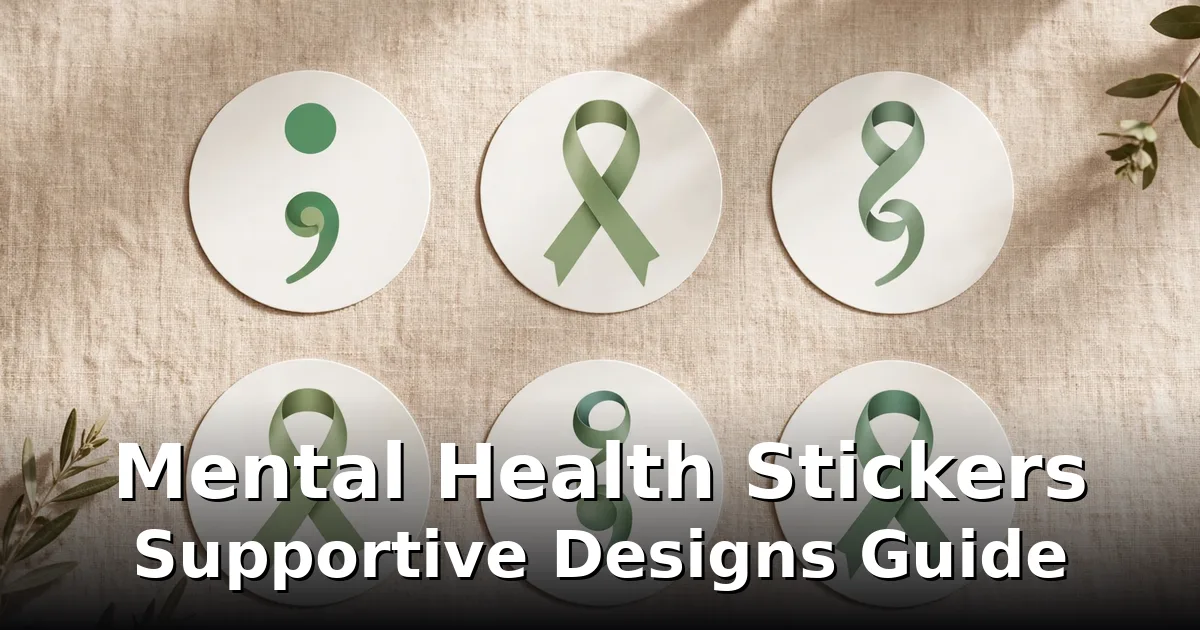
You've seen them on water bottles in the gym, on laptops in lecture halls, on journals in coffee shops: a semicolon, a green ribbon, a gentle reminder that says "it's okay not to be okay." Mental health awareness stickers have become one of the most common ways people wear an important conversation in public — visible, low-key, and personal.
This guide is an honest look at the category: the design language people actually use, how to pick wording that feels supportive rather than preachy, and the practical side (materials, sizes, placement) so your sticker lasts as long as the message matters to you. One important note up front: stickers can spark conversations and normalize seeking help, but they're not therapy — if you're struggling, a counselor or crisis line is the resource that counts.
Table of Contents
Key Takeaways
- Mental health stickers cluster into a few design families: affirmation text, mood-honest humor, community symbols, and calm nature motifs.
- Choose wording you'd actually want to read on a hard day — gentle and specific beats generic and grand.
- Vinyl with a UV laminate keeps the message legible on bottles and laptops for years.
- A sticker normalizes the conversation; professional support is what helps when things get serious.
The Design Categories People Actually Buy
The category is broader than the classic green ribbon. Four design families dominate:
Affirmation text: short, readable reminders — "breathe," "you are enough," "one day at a time." These are the bestsellers on marketplaces like Etsy for a reason: they function like a note from a friend, visible on the object you reach for most.
Mood-honest humor: dark-cute designs that name the feeling instead of papering over it — grumpy moods, "haunted but better," skeletons drinking coffee. They resonate because they're honest; they say "I'm not pretending everything's fine," which for many people is more supportive than relentless positivity.
Community symbols: the semicolon (a sentence that could have ended but didn't), the green awareness ribbon, sun-and-moon motifs. These signal belonging to people who recognize them — a quiet way of saying "me too."
Calm nature motifs: botanical line art, soft landscapes, cozy scenes. Less message, more atmosphere — for people who want the comfort without the text.
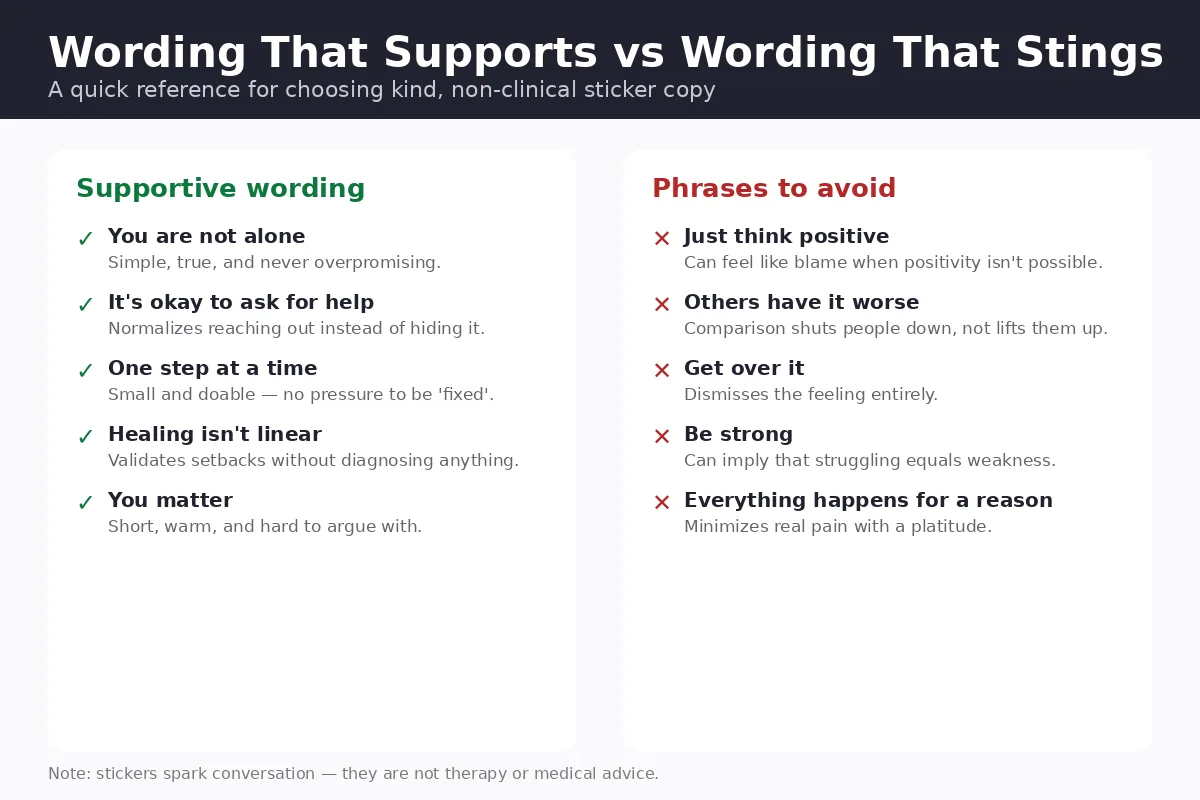
Choosing Wording That Helps, Not Preaches
The difference between a sticker that lands and one that gets ignored is specificity. "Mental health matters" is true and forgettable; "it's okay to have a bad day" is something a person actually needs to hear. When choosing, apply one test: would I want to read this on my worst day? If the answer is yes, it's a good pick.
Watch the tone around clinical language. Stickers that name real conditions ("anxiety," "depression") can feel validating to people who live with them and alienating to those who don't — neither reaction is wrong, but it's worth choosing deliberately rather than accidentally. And avoid designs that romanticize struggle; the goal is comfort, not aestheticizing pain.
Why They Resonate: Visibility & Community
A sticker on a water bottle at the gym or a laptop in a lecture hall does something subtle and powerful: it makes a private struggle publicly normal. Someone across the room sees a semicolon or a gentle affirmation and thinks, "someone else gets it." That moment of recognition is the whole point of the awareness category — reducing the isolation that makes mental health struggles worse.
They're also conversation starters in the best sense: low-stakes, opt-in, and deniable. Nobody has to explain their sticker if they don't want to. But when they do, it's often the first honest conversation of the day. That's more than décor.
Materials & Placement: Making It Last
A message sticker that peels, fades, or shreds undermines itself. Choose thick vinyl with a UV laminate — it stays legible through hand-washing, sunlight, and daily handling. Sizes of 2–3 inches suit laptops and water bottles; smaller ones work for journals and phone cases. Smooth, dry surfaces (glass, metal, sealed plastic) give the best bond; clean with isopropyl alcohol first and let it dry.
Placement is personal, but there's a pattern worth noting: water bottles and laptops are the two most public surfaces people own, which is why awareness designs cluster there. Journals and mirrors are the private placements — the ones you read for yourself. Both are valid; pick the audience you want.
Gifting Them Well: Thoughtful, Not Tokenistic
Mental health stickers make genuinely good small gifts — for a friend starting therapy, a student heading into exams, a coworker having a rough season. The key is pairing the sticker with the real thing: a note, a coffee, a check-in. A sticker on its own can feel like a Hallmark solution to a human problem; a sticker plus a conversation feels like care.
Let the person choose their own message when possible. A sticker pack or a gift card to an artist's shop respects the fact that the right words are deeply personal — what comforts you might not comfort them.
Real Picks: Designs With Something to Say
Individual artist designs on Redbubble that fit the category honestly — activism, mood-honesty, and dark-cute comfort:

"Big Fan of Human Rights" Retro Sticker
A retro-typography values statement that wears like an awareness sticker: bold, readable, and unapologetic about where it stands. For people whose mental health journey is tied to advocacy and identity. Available on Redbubble as a sticker.
View on Redbubble →
"Serious Grumpy Mood" Autumn Aesthetic Sticker
The mood-honest family of mental health design: a sticker that names the feeling instead of toxic-positivity-ing over it. Sometimes "I'm grumpy" is the most honest thing you can put on your laptop. Available on Redbubble as a sticker.
View on Redbubble →
"Haunted Never Better" Skeleton Coffee Sticker
Dark-cute comfort: a skeleton with roses and coffee that treats hard seasons with humor rather than despair. The kind of design that makes someone across the room nod in recognition. Available on Redbubble as a sticker.
View on Redbubble →For more single-design stickers in the self-care and awareness space — including retro-styled designs from the 80s sunset sticker trend — browse the full design catalog — and see the custom sticker guide for materials and ordering know-how.
Designing Your Own Awareness Sticker
Making your own awareness sticker — for yourself, a support group, or a fundraiser — is easier than most people expect, and the design rules are straightforward. Wording first: write the sentence you'd want to read on a hard day, then cut it in half. Short survives at sticker scale; paragraphs don't. Readability: bold, simple lettering on a calm background — save the delicate script for larger formats. Color: soft, low-saturation palettes (sage, dusty blue, warm cream) read as comforting; that's why they dominate the category. Symbols with meaning: the semicolon, the green ribbon, sun-and-moon motifs — these carry recognition, so use them intentionally and respectfully.
For printing a single design, print-on-demand platforms accept a transparent PNG and handle the rest — no minimum order, which is ideal for personal or small-group use. If you're making stickers for an event or fundraiser, a bulk printer gets the per-unit cost down; just order a physical proof first. Either way, choose vinyl with UV laminate so the message stays legible as long as it matters.
Frequently Asked Questions
What do mental health awareness stickers typically say?
Common designs include short affirmations ("breathe," "you are enough," "one day at a time"), community symbols like the semicolon or green ribbon, and mood-honest humor. The best ones use specific, gentle wording rather than generic slogans.
Where should I put a mental health awareness sticker?
Laptops and water bottles are the most common public placements — they're visible and normalize the conversation. Journals and mirrors are popular private placements for messages meant for yourself. Both are equally valid.
Are mental health stickers a good gift?
They can be thoughtful small gifts, especially paired with a note or check-in. Let the person choose their own message when possible — the right words are deeply personal. A sticker plus a real conversation always beats a sticker alone.
What material should a mental health sticker be?
Thick vinyl with a UV laminate is the best choice — it stays legible on water bottles, laptops, and journals through daily handling, hand-washing, and sunlight. Paper stickers fade and shred too quickly for a message meant to last.
Can a sticker actually help with mental health?
Stickers can normalize the conversation, offer small daily reminders, and help people feel less alone — all genuinely valuable. But they're not treatment. If you're struggling, reaching out to a counselor, therapist, or crisis line is the step that matters.