Eco-friendly t-shirt printing isn't one method — it's a stack of decisions about ink, fabric, production model, and honesty. A water-based print on conventional pesticide-heavy cotton isn't the win it sounds like, and a "green" label without a certification behind it is just marketing. This guide breaks the stack into checkable parts so you can tell the difference.
Table of Contents
Key Takeaways
- Sustainability = ink + fabric + production model. Optimizing one layer while ignoring the others is theater.
- Water-based inks and discharge printing beat plastisol on toxicity and feel.
- DTG's on-demand model eliminates overproduction waste — often the biggest footprint saver.
- Look for GOTS and OEKO-TEX Standard 100; vague "eco" claims without certification deserve skepticism.
- The greenest shirt is one that lasts — durability is a sustainability feature.
1. The Three Layers: Ink, Fabric, Production
Judge any "eco-friendly" claim against all three:
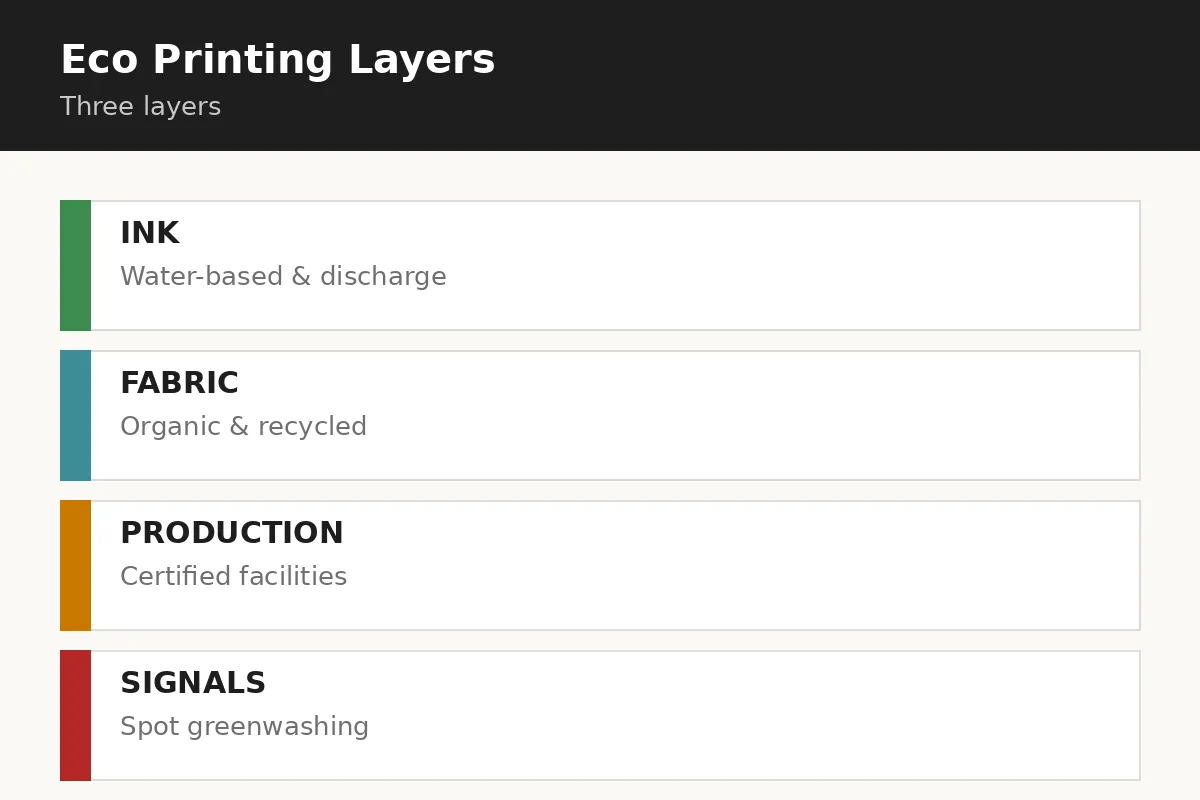
- Ink: what's in it, what it off-gasses, and how the shop cleans up.
- Fabric: how the fiber was grown or made — this is usually the largest footprint.
- Production model: made-to-order versus bulk runs that risk deadstock in landfills.
A shop can score well on one and badly on the others. The honest ones will tell you which.
This layered view also explains why single-issue marketing is so common: it's easy to advertise "water-based inks" while staying quiet about conventional cotton blanks or bulk overproduction. Always check all three layers before accepting the label.
2. Inks Compared: Plastisol, Water-Based, Discharge
Plastisol
The industry default for decades: PVC-based, cured with heat. Durable and cheap, but it contains phthalates, requires chemical solvents for screen cleanup, and sits on the fabric as a plastic layer. It's the ink to move away from if sustainability matters.
Water-Based Inks
Water is the solvent instead of plasticizers. These inks soak into the fibers for a soft hand feel, handle fine detail well, and avoid the toxic cleanup of plastisol. The trade-off: they're fussier to print (they dry in the screen faster) and typically cost more.
Discharge Printing
A water-based ink with an activator that removes the garment's dye and replaces it with pigment — the print becomes part of the fabric with zero feel. Excellent for dark garments without the heavy ink deposit of plastisol. It requires precise chemistry and ventilation, so it's a pro-shop method, not a DIY one.
3. Printing Methods, Ranked by Impact
| Method | Why It's Greener | Caveats |
|---|---|---|
| Water-based DTG | On-demand (no deadstock), low water use, no screens or emulsions | Per-unit energy higher than bulk screen at huge volumes |
| Water-based screen printing | Non-toxic inks, very durable prints | Setup waste (screens, emulsion); only efficient at volume |
| Discharge printing | Zero-hand feel, minimal ink deposit | Chemical activators need proper handling |
| Sublimation on rPET | Minimal water, permanent prints | Requires polyester; sheds microplastics in wash |
| DTF | Low ink waste, versatile | PET film creates physical waste per print |
The single biggest lever is usually the production model: printing only what sells (DTG on-demand) eliminates the overproduction that puts unsold shirts in landfills. For the full technical picture, see our DTG printing guide.
4. Fabric Choice Matters More Than Ink
The cleanest ink on conventional cotton still carries cotton's footprint — heavy irrigation and pesticide use. Match the fabric to the ink's credentials:
- Organic cotton (GOTS-certified): grown without synthetic pesticides; the standard credible baseline.
- Hemp: low irrigation needs, naturally pest-resistant, and a distinctive texture that suits minimalist designs.
- Tencel / lyocell: wood-pulp fiber made in a closed-loop process; silky and strong.
- Recycled polyester (rPET): diverts plastic bottles from waste streams; the honest choice when the design needs sublimation or performance fabric.
5. Certifications Decoder
- GOTS (Global Organic Textile Standard): covers the whole chain — fiber, processing, labor. The gold standard for "organic" claims on garments.
- OEKO-TEX Standard 100: certifies the finished product is free from harmful substances. Common on DTG inks and blanks; it says nothing about how the fiber was grown.
- bluesign: audits the manufacturing process for chemical safety and resource efficiency.
- FSC: relevant for paper-based packaging and transfer papers, not the garment itself.
A useful rule: GOTS speaks to the garment, OEKO-TEX speaks to the ink and finished product safety. A credible eco claim usually names at least one.
6. Greenwashing Signals
- "Eco-friendly" with no certification named. Ask which one.
- "Natural" plastisol. Plastisol is PVC-based by definition; the word "natural" doesn't change the chemistry.
- Spotlighting one green input (recycled packaging) while silent on ink and fabric.
- Vague water claims without a baseline — "uses less water" than what?
- Durability silence. The greenest shirt is one worn for years. A print that cracks in ten washes wastes everything that went into it — ask about wash testing.
For the full ordering workflow, read our custom apparel guide; for making shirts yourself, our home printing guide. Browse finished designs in our design collection.
7. Don't Forget Packaging and Shipping
The shirt isn't the whole footprint. Poly mailers are plastic; switching to recycled or compostable mailers is a straightforward upgrade. Tissue paper, stickers, and thank-you cards add up across thousands of orders — look for recycled or FSC-certified paper options. And shipping itself matters: consolidating orders, choosing slower ground shipping over air when the timeline allows, and printing closer to the customer (which print-on-demand networks do naturally) all cut transport emissions. None of this shows up in a product photo, but eco-conscious customers increasingly ask about it.
8. The Eco Print Checklist
Use this when briefing a printer or auditing your own line:
- Ink: water-based or discharge — name the type, not just "eco ink."
- Fabric: GOTS organic cotton, hemp, Tencel, or rPET — with the certification to prove it.
- Model: on-demand where possible, to eliminate deadstock.
- Certifications: at least one of GOTS, OEKO-TEX Standard 100, or bluesign on the product or process.
- Durability: ask about wash testing — a long-lived print is a sustainability feature.
- Packaging: recycled or compostable mailers, minimal plastic.
A printer who answers all six clearly is a partner worth keeping. One who waves them away with "we're very green" is telling you everything you need to know.
9. A Note on AI-Generated Artwork
AI-generated designs pair naturally with eco printing for a practical reason: they're typically full-color, gradient-heavy, and produced in small test batches — exactly the profile where DTG beats screen printing on both quality and waste. Screening a twelve-color AI illustration means twelve screens, twelve setups, and emulsion wash-off for each; DTG prints it in one pass with no setup waste. If you're launching an AI-art apparel line, the sustainable default is on-demand DTG on certified organic blanks, and you only graduate to water-based screen printing when a design proves itself at volume.
Frequently Asked Questions
What is the most eco-friendly t-shirt printing method?
Water-based DTG on organic cotton is the strongest overall answer: non-toxic inks, minimal water and setup waste, and on-demand production that eliminates deadstock. Water-based screen printing is close for large runs of simple designs.
Are water-based inks really better than plastisol?
Yes on toxicity and feel: water-based inks avoid PVC and phthalates, clean up without harsh solvents, and soak into the fabric instead of sitting on top. Plastisol remains cheaper and slightly more opaque on darks, which is why it persists.
How can I verify a printer's eco claims?
Ask for specific certifications: GOTS for the garment, OEKO-TEX Standard 100 for ink and product safety. Ask what ink type they use, how they clean screens, and whether they print on demand or in bulk. Vague answers are your signal to keep looking.
Is sublimation eco-friendly?
Partially. Sublimation uses little water and produces permanent prints, but it requires polyester — a plastic that sheds microfibers in the wash. Using recycled polyester (rPET) and washing with a microfiber filter makes it meaningfully better.
Does eco-friendly printing cost more?
Somewhat — organic blanks and water-based inks cost more than conventional alternatives. But on-demand production removes inventory risk, and buyers seeking sustainable products generally accept the premium, which often protects margins better than competing on price.