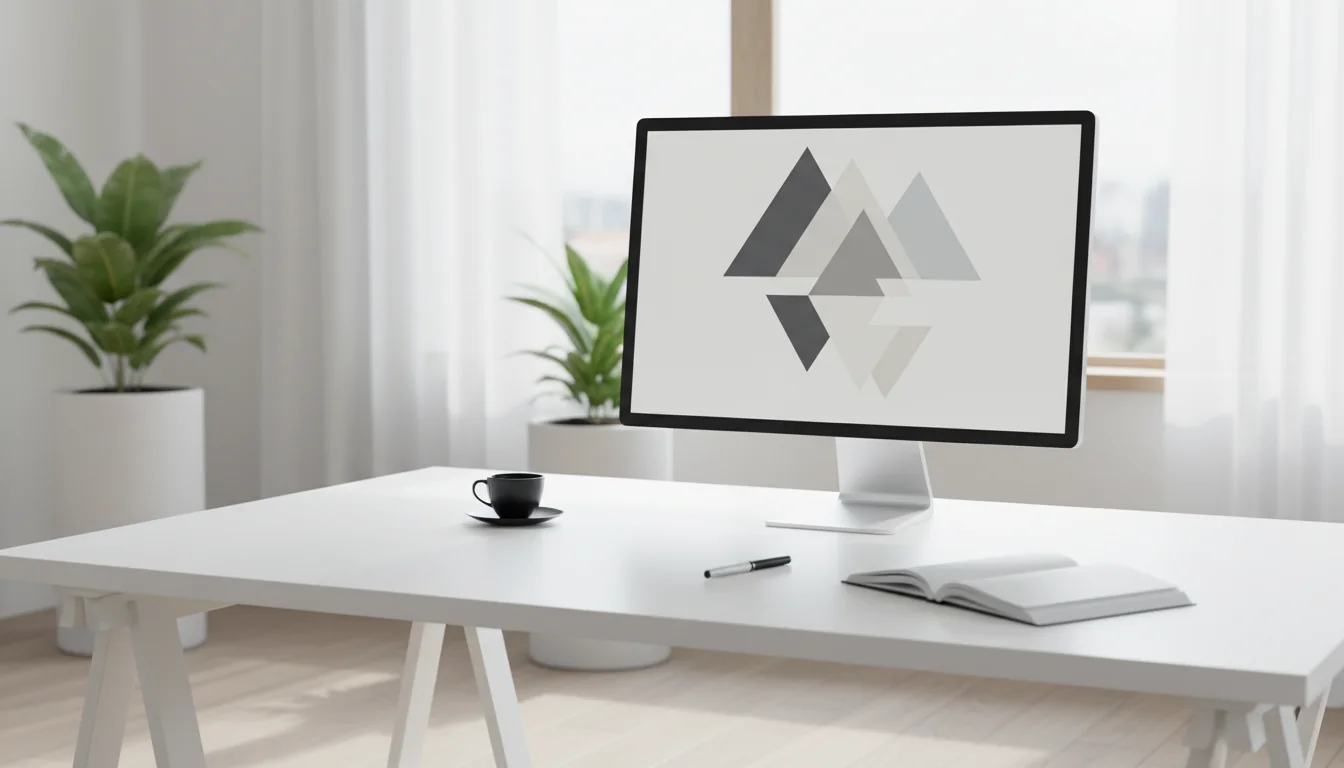
In a world defined by sensory overload, constant connectivity, and visual clutter, Minimalist Design stands as a quiet rebellion. It is arguably the most influential design movement of the 20th and 21st centuries, permeating our architecture, our digital interfaces, and our living rooms. But minimalism is far more than white walls and empty spaces; it is a deliberate philosophy of value.
True minimalist design is not about what is removed, but rather about what remains. It is the art of stripping away the superfluous to reveal the essential structure, beauty, and function of an object or space. Whether you are an interior designer, a web developer, or simply a homeowner seeking tranquility, mastering this aesthetic requires a deep understanding of balance and intentionality.
Key Takeaways
Intentionality is Key: Minimalism is not about deprivation; it is about highlighting the essential elements that provide value and function.
Form Follows Function: Originating from the Bauhaus movement, this principle dictates that an object's aesthetic should never compromise its utility.
Negative Space is Active: Empty space (white space) is a crucial design element that guides the eye and creates hierarchy.
Texture Over Color: To prevent minimalist spaces from feeling sterile, designers rely on varied textures and high-quality materials rather than ornamentation.
Cross-Disciplinary Application: The principles of minimalism apply equally to architecture, interior design, graphic arts, and web development.
Table of Contents
The Historical Roots of Minimalism
To understand the authority of minimalist design, one must look at the giants upon whose shoulders modern designers stand. While the trend feels contemporary, its roots run deep into history, blending Eastern philosophy with Western industrialism.
Japanese Zen Influence
Long before the West embraced simplicity, Japanese culture championed the concepts of Ma (negative space) and Wabi-Sabi (finding beauty in imperfection and simplicity). Traditional Japanese architecture uses open floor plans, natural materials, and a deep connection to nature to foster contemplation—a direct ancestor to today's minimalist aesthetic.
The Bauhaus Movement
In the West, the seeds of minimalism were sown in 1919 by the German art school, Bauhaus. Pioneers like Ludwig Mies van der Rohe—who coined the phrase "Less is more"—rejected the heavy ornamentation of the Victorian era. They argued that mass production required clean lines and that the soul of a building lay in its structural integrity, not its decoration.
De Stijl and Scandinavian Design
Concurrently, the Dutch De Stijl movement reduced visual compositions to the vertical and horizontal, using only black, white, and primary colors. Later, mid-century Scandinavian design humanized these stark concepts, introducing curved lines, warm woods, and a focus on affordability and comfort (hygge), cementing minimalism as a livable, cozy aesthetic.
Core Principles of Minimalist Design
Achieving a minimalist look requires discipline. It is easy to make a space look empty; it is difficult to make it look simple. Here are the governing principles.
1. Functionality First
Every element in a minimalist design must serve a purpose. If an object does not have a function, it is ornamentation, and in strict minimalism, ornamentation is excess. This forces the designer to choose items where the form itself is beautiful enough to stand alone without embellishment.
2. The Power of Negative Space
In minimalism, what you leave out is as important as what you put in. Negative space (or whitespace in graphic design) allows the design to breathe. It reduces cognitive load for the viewer, allowing them to focus instantly on the focal point. It suggests luxury, calmness, and order.
3. Clean Lines and Geometric Shapes
Simplicity is achieved through geometry. Furniture, architecture, and graphics rely on straight lines, smooth curves, and flat surfaces. You will rarely find intricate patterns, floral motifs, or complex molding in a minimalist environment.
4. Monochromatic and Neutral Palettes
Color is often used sparingly to avoid visual chaos.
The Base: Whites, beiges, greys, and earth tones form the foundation.
The Accent: When color is used, it is intentional—a single bold chair in a white room, or a bright CTA button on a clean website.
Minimalism in Interior Architecture
Applying minimalism to the home is the most tangible way to experience the benefits of the aesthetic. A minimalist home is easier to clean, less stressful to inhabit, and often more sustainable.
The Role of Texture
A common critique of minimalism is that it feels "cold" or "hospital-like." The solution is texture. By layering different materials—such as a wool rug, a velvet sofa, a glass table, and unpolished wood—you create visual interest and warmth without adding clutter or clashing colors.
Lighting as a Design Element
In the absence of decoration, light becomes the decoration. Large windows that allow natural light to flood the space are a staple. Artificial lighting is used architecturally: track lighting, recessed lights, or singular, sculptural pendant lights that act as the room's art piece.
"Hidden" Storage
To maintain clean lines, the mess of daily life must be concealed. Floor-to-ceiling cabinetry with push-to-open hardware (eliminating handles) allows a kitchen or living room to appear seamless, hiding appliances and personal items behind a uniform facade.
Minimalism in the Digital Age
Minimalist design is perhaps most dominant in the digital realm. As users migrated to mobile screens, complex designs became unusable. This ushered in the era of Flat Design and Material Design.
Why Minimalism Rules the Web:
Load Times: Fewer elements mean faster websites, which improves SEO and user retention.
User Experience (UX): By removing distractions, designers guide users effectively toward the desired action (conversion).
Responsiveness: Simple, grid-based layouts scale perfectly from a desktop monitor to a smartphone screen.
Examples include the Google homepage (the ultimate minimalist interface) and Apple’s hardware and software ecosystems, which prioritize intuitive usage over visual flair.
Common Misconceptions
Before embarking on a minimalist project, it is vital to debunk the myths that surround the movement.
Myth 1: Minimalism is Cheap
Reality: Minimalism often costs more. Because there is no ornamentation to hide behind, the construction and materials must be flawless. Poor craftsmanship is immediately visible in a minimalist object.
Myth 2: You Can't Have Personal Items
Reality: Minimalism is not about owning nothing; it is about owning things that matter. You can display a collection of pottery or books, provided it is curated intentionally and doesn't overwhelm the space.
Myth 3: It’s Only for Modern Aesthetics
Reality: You can have a "rustic minimalist" farmhouse or a "classic minimalist" apartment. The principles of decluttering and negative space apply to any era of style.
Conclusion
Minimalist design is not merely a visual trend; it is a tool for clarity. In a culture that frequently conflates "more" with "better," minimalism asks us to pause and evaluate what is truly essential. Whether you are redesigning a corporate brand identity or decluttering your bedroom, the result of minimalism is always the same: a shift in focus from the superficial to the substantial.
By mastering the art of "less," you create room for more—more time, more focus, and more appreciation for the beauty that remains.
Frequently Asked Questions (FAQ)
1. What is the 90/90 rule in minimalism?
The 90/90 rule is a decluttering strategy popularized by The Minimalists. Pick an item and ask yourself: "Did I use this in the last 90 days? Will I use it in the next 90 days?" If the answer to both is no, it is likely safe to let it go.
2. Can minimalist design use bright colors?
Yes, but with strict intentionality. Minimalism usually relies on neutrals, but "Pop Minimalism" or "Maximalist Minimalism" utilizes bright blocks of color. The key is to keep the palette limited (usually one or two colors) and the lines clean.
3. How does minimalist design affect mental health?
Psychological studies suggest that visual clutter contributes to an increase in cortisol (the stress hormone). By reducing visual noise, minimalist environments can lower anxiety, improve focus, and promote a sense of well-being.
4. Is minimalism the same as modern design?
Not exactly. "Modern design" refers to a specific time period (early to mid-20th century). While Modern design is almost always minimalist, minimalist design can be applied to contemporary, industrial, or even traditional styles.
The Ultimate Guide to Finding the Funniest Graphic Tees Online: A 2026 Master Class 15 Unique Personalized Gifts They’ll Cherish Forever: The Ultimate 2026 Guide