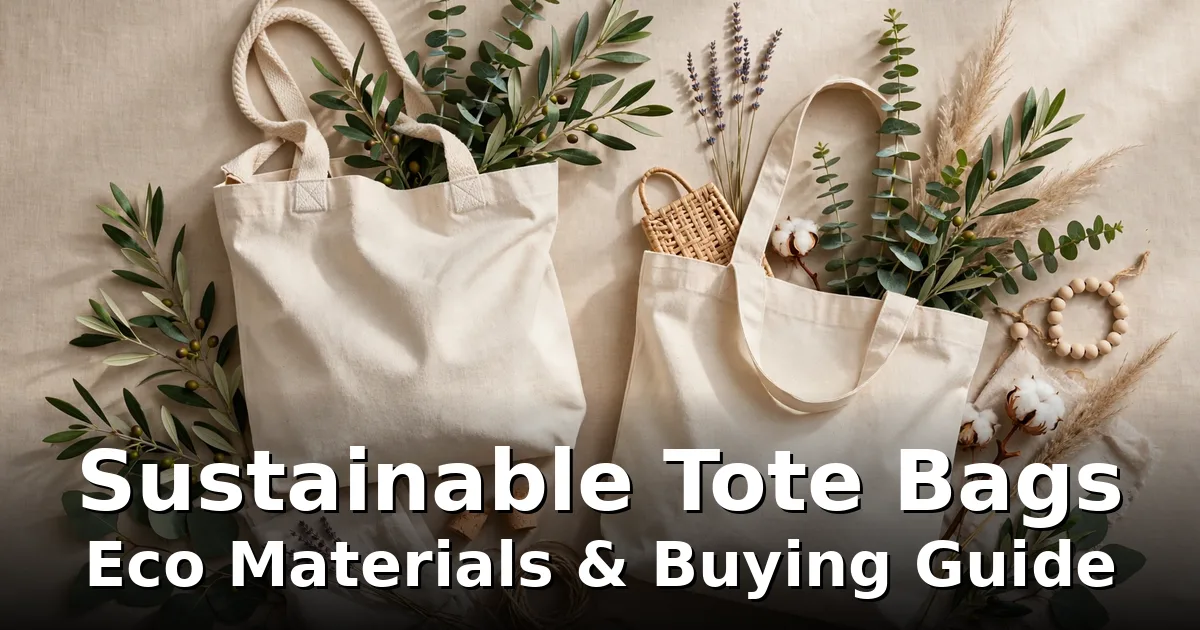
A sustainable tote bag is only as green as its material, its construction, and how often it actually gets used. Walk into any grocery store or trade show and you will see rows of canvas bags with eco slogans — but not all of them deserve the label. This guide breaks down the real fabric science behind sustainable tote bags, the certifications worth trusting, how to spot greenwashing, and the durability details that determine whether a bag becomes a decade-long companion or next month's landfill.
Key takeaways
- Reuse is the whole point: a tote's environmental benefit comes from replacing hundreds of single-use bags over years, not from the word "eco" on the side.
- Material matters most: organic cotton (GOTS), recycled PET, hemp, jute, and recycled cotton each have genuinely different trade-offs.
- Certifications beat slogans: look for GOTS, OEKO-TEX, or documented recycled-content claims rather than vague "eco-friendly" wording.
- Construction decides lifespan: fabric weight, reinforced handles, and gussets separate durable bags from disposable-quality ones.
- Care extends everything: washing cold and air drying keeps both fabric and print alive for years.
Table of contents
- The environmental reality of the tote bag
- Fabric science: beyond basic cotton
- Comparison: choosing the right sustainable material
- How to spot greenwashing
- Durability: what separates a keeper from a throwaway
- Sustainability branding that actually works
- Care, repair, and end of life
- Frequently asked questions
The environmental reality of the tote bag
Here is the honest starting point most marketing skips: producing a cotton tote takes considerably more water, energy, and land than producing a single thin plastic bag. A tote only becomes the better choice once it is reused enough times to offset that production footprint. The most sustainable bag is, quite literally, the one you actually remember to bring with you.
This is why material choice changes the math. Conventional cotton is water- and pesticide-intensive to grow; organic cotton, recycled PET, and hemp shift the equation because they avoid new pesticide loads, divert waste, or need far less irrigation. A life-cycle assessment published by the Danish Environmental Protection Agency found that an organic cotton tote reaches its environmental break-even point with far fewer uses than a conventional cotton one — but the underlying lesson is the same either way: the bag has to survive years of grocery hauls, commutes, and beach trips to earn its footprint back.
For corporate or campaign buyers, that reframes the purchasing decision. A cheap, thin tote that tears in a season is not an eco product — it is disposable packaging with a green slogan. A heavier, well-constructed bag that people keep for years is where the real environmental and brand value lives.
Fabric science: beyond basic cotton
When selecting a tote, the jargon gets thick fast. Here is what the key terms actually mean, in plain language.
Organic cotton (GOTS)
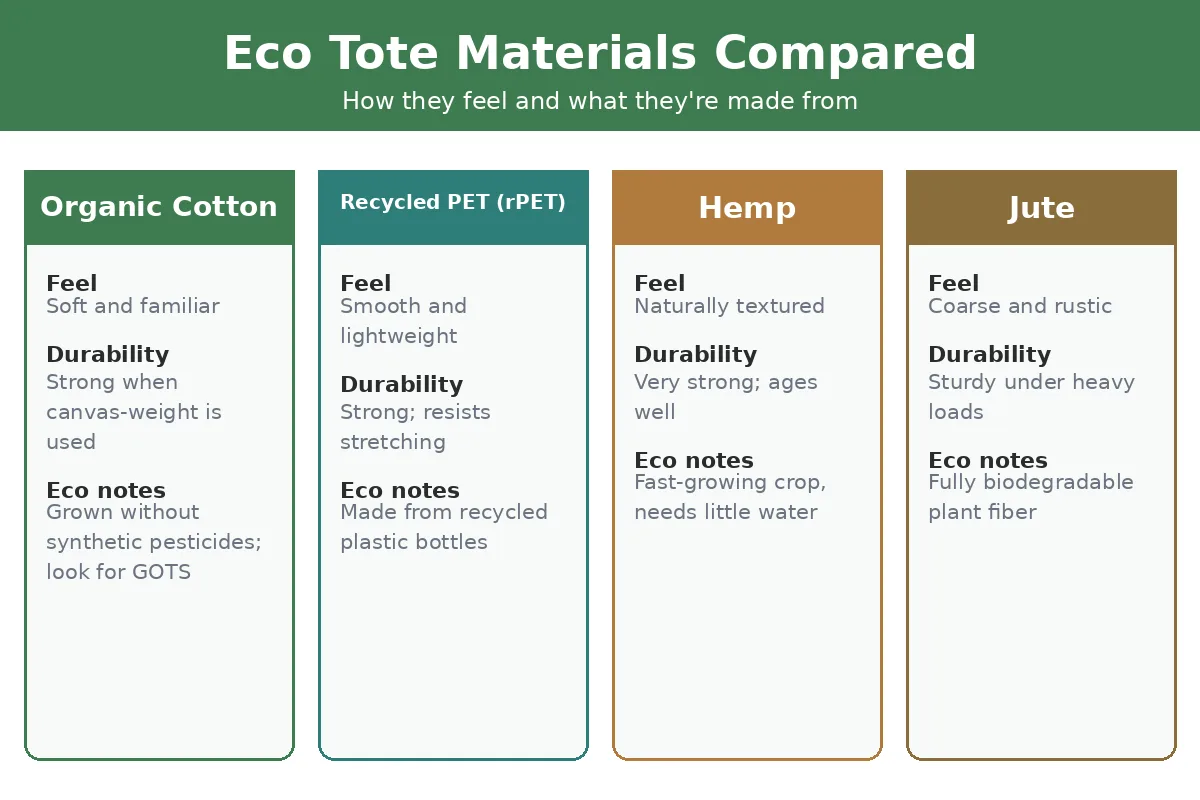
The Global Organic Textile Standard (GOTS) is the leading textile processing standard for organic fibers, covering ecological and social criteria across the whole supply chain with independent certification. GOTS-certified cotton is grown without synthetic pesticides or GMOs. It is soft, biodegradable, and prints beautifully — but it still uses significant water to grow and can shrink if washed hot.
Recycled PET (rPET)
Many discarded plastic bottles are shredded and spun into rPET fibers. These bags are durable, water-resistant, and represent a circular-economy approach: waste becomes a functional tool. The trade-offs are a more synthetic feel and the general microplastic-shedding concern that applies to all synthetic textiles — less of an issue for totes than for clothing, since bags are laundered rarely.
Hemp
Hemp grows fast with very little water, needs few pesticides, and returns nutrients to the soil. The resulting fabric is exceptionally strong and naturally resistant to mold. It remains less common than cotton partly because of historical regulatory baggage and a higher price point — but for a premium sustainability message, it is hard to beat.
Jute
Jute has a low carbon footprint and is very affordable, with a distinctive rustic look. The rough texture does not suit fine-detail printing, so it works best for bold, simple graphics and farmer's-market-style branding.
Recycled cotton
Made from textile scraps that would otherwise go to landfill, recycled cotton needs no new water or farmland to produce. The shorter fibers mean slightly lower tensile strength, which is fine for general giveaways and trade shows but worth knowing for heavy-duty use.
Useful specs: GSM and OEKO-TEX
GSM (grams per square meter) measures fabric weight — the higher the number, the thicker the fabric. A lightweight 6oz tote (around 200 GSM) folds easily into a pocket; a 12oz canvas (around 400 GSM) stands up on its own and carries heavy loads. OEKO-TEX Standard 100 is a separate certification that tests the finished textile for harmful substances — it does not mean the fiber is organic, but it does mean the product passed independent safety screening.
Comparison: choosing the right sustainable material
There is no single winner — the right material depends on your budget, your message, and how the bag will be used.
| Material | Strengths | Trade-offs | Best for |
|---|---|---|---|
| Organic cotton (GOTS) | Biodegradable, soft hand, no synthetic pesticides in farming | Still water-intensive to grow; can shrink in hot wash | Premium retail, eco branding, detailed prints |
| Recycled PET (rPET) | Diverts plastic waste, water-resistant, very durable | Synthetic feel; microplastic considerations | Groceries, outdoor events, all-weather use |
| Hemp | Low water use, extremely strong, naturally mold-resistant | Higher cost, narrower color range | High-end sustainability campaigns |
| Jute | Low carbon footprint, affordable, rustic aesthetic | Rough texture, not suited to fine-detail printing | Farmer's markets, natural-food branding |
| Recycled cotton | No new water or farmland; keeps textile waste out of landfill | Shorter fibers, slightly lower strength | General giveaways, trade shows, conferences |
How to spot greenwashing
"Eco-friendly" is not a regulated term, so it pays to read past the slogan. Genuine sustainability claims name the specific fiber (organic cotton, recycled PET), the percentage of recycled or organic content, and ideally a certification body like GOTS or OEKO-TEX. Vague phrases like "natural," "earth-conscious," or a green leaf icon with no backing documentation are marketing, not evidence.
Also check the whole product, not just the fabric. A tote marketed as sustainable but printed with heavy plastisol inks, shipped individually in poly mailers, and built to tear in a season has not earned the label. Ask suppliers about fabric weight, certifications, care labeling, and material documentation — and be wary of any "eco" claim that cannot be traced to a standard.
Durability: what separates a keeper from a throwaway
The biggest enemy of sustainability is disposable quality. If a tote's handle snaps on the third trip to the market, it is not an eco-friendly product — it is more trash with a green label. Look for these construction markers:
- Cross-stitched handles: an "X" pattern where the handle meets the bag distributes weight and resists tearing.
- Gusseting: a bottom or side gusset lets the bag expand to hold real groceries instead of flat envelopes.
- Overlock stitching: finished internal seams that resist fraying over time.
- Honest fabric weight: for regular grocery or book duty, 10oz canvas and up is a sensible floor.
A well-made bag in a design people genuinely like gets carried for years — and every reuse is what pays back its production footprint. If you are choosing a bag as a daily carrier, our custom bags 101 guide covers strap drop, closures, and structure in more detail.
Sustainability branding that actually works
For organizations using totes as awareness or promotional items, the design approach matters as much as the material. The bags that survive longest in the wild tend to be the ones people are proud to carry: clean artwork, a message with genuine style, and the logo placed subtly rather than stamped across the whole front. Current design directions include minimalist line art with nature themes, bold typography with short calls to action, and utility-first details like an interior pocket or a loop for a reusable water bottle.
And keep the message honest. A beautiful, durable bag with an authentic sustainability story — real fiber, real certification — builds far more trust than the loudest "100% ECO" claim on the cheapest blank.
Care, repair, and end of life
Most cotton and hemp totes should be washed cold and air-dried; dryer heat can shrink natural fibers and crack printed graphics. For rPET bags, a wipe-down with a damp cloth is usually enough. Small repairs — re-stitching a handle, patching a seam — are worth doing, since every extra year of use improves the bag's environmental math.
At true end of life, pure cotton, hemp, and jute are biodegradable and can be composted if shredded (provided the inks are not plastic-based). rPET bags may be recyclable with other plastics — check with a local textile recycling program first.
Frequently asked questions
Are tote bags actually better for the environment than plastic bags?
Yes, but only with repeated use. Because totes take more energy and water to produce than a thin plastic bag, their environmental benefit comes entirely from lifespan. Using one well-made tote for years is significantly better than using hundreds of disposables; using a tote twice and discarding it is not.
What does GOTS certified mean for a tote bag?
GOTS (Global Organic Textile Standard) certifies that the fibers were grown organically and processed under ecological and social criteria, verified by independent certification of the supply chain. It is one of the most meaningful labels to look for on an eco-claimed tote.
How do I wash an eco-friendly tote bag without ruining it?
Wash cotton and hemp totes in cold water and air dry. High dryer heat can cause significant shrinkage and damage printed graphics. For rPET bags, a wipe-down with a damp cloth is usually sufficient.
What is the most durable material for a reusable bag?
Hemp and heavy-weight canvas (12oz and up) are among the most durable options, with high tensile strength that stands up to heavy groceries or books for years. Recycled PET is also very strong and adds water resistance.
Can tote bags be recycled at the end of their life?
Pure cotton, hemp, and jute bags are biodegradable and can be composted if shredded, provided they do not use plastic-based inks. rPET bags can often be recycled with other plastics — check with a local textile recycling facility first.
Browse the AIPrintVerse design collection for original artwork for custom bags and accessories.
Related guides
Continue with these related AIPrintVerse guides: