
The oversized silhouettes of the 90s and the tech-heavy textures of the early 2000s are everywhere again — but the retro streetwear of 2026 isn't a carbon copy of the past. It's a remix: archival designs rebuilt with modern fits, heavier fabrics, and a new obsession with durability. This guide breaks down how heritage brands and niche revivals are doing nostalgia right, what to check before you buy, and how to wear it without looking like a costume.
Table of Contents
Key Takeaways
- 2026 retro streetwear is defined by "New Nostalgia" — archival looks with modern fits and heavier fabrics.
- Heritage brands win by leaning into their actual history; revivals win by honoring their cultural roots.
- Durability is the real trend: natural fibers, heavyweight cotton, and pieces built to age well.
- The "Rule of One" — one hero retro piece per outfit — keeps the look intentional.
- Check hardware, fabric weight, and stitching to separate authentic heritage pieces from cheap copies.
The 2026 Aesthetic Shift
Walk through any fashion district right now and the pattern is unmistakable: oversized 90s silhouettes, glossy Y2K textures, workwear staples. The shift away from the sleek, minimal aesthetics of the early 2020s is complete. People are craving texture, grit, and garments that feel like they have a soul.
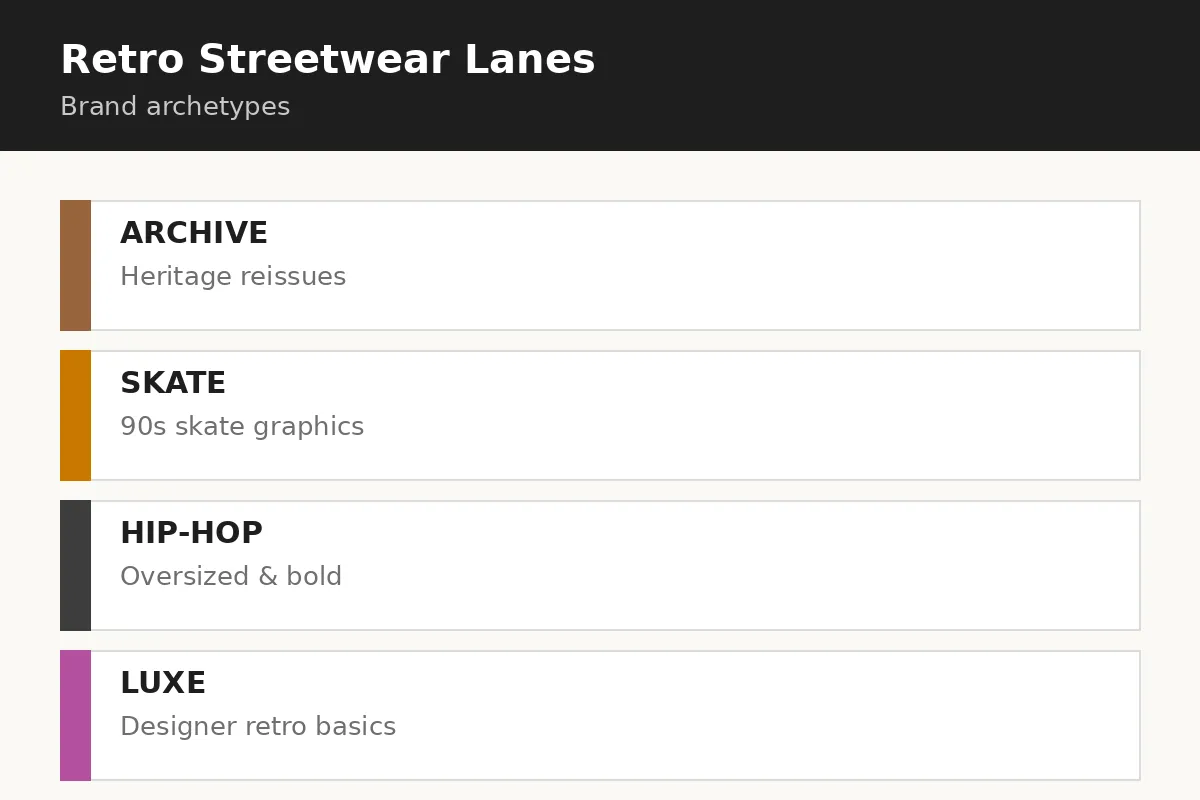
The key word is feel. The retro streetwear winning in 2026 isn't just about the logo — it's about heavyweight loopback cotton, raw selvedge denim, and nylon blends that actually withstand weather. Brands are treating their 90s archives like design bibles while updating fits for modern bodies.
Heritage Labels: The Titans of Nostalgia
The heritage brands dominating the retro wave share one trait: they stayed the same while everyone else chased trends.
Surf and Skate Origins
Labels born from 80s and 90s surf-skate culture have mastered the "archive drop" — reissuing designs from their own history in limited runs. The appeal is authenticity: these are the actual graphics, on the actual blanks, from the era everyone is romanticizing. The frenzy they create comes from real scarcity, not manufactured hype.
Workwear Crossover
Heritage workwear labels have become streetwear staples by leaning into the "wabi-sabi" philosophy — finding beauty in imperfection. A faded, pre-loved canvas jacket feels like an heirloom; a brand-new stiff one feels soulless. The trend toward distressed, "pre-loved" finishes is really a trend toward garments that look like they've lived a life.
90s Prep and Japanese Denim
On the refined end, 90s New York prep aesthetics and Japanese heritage denim have carved out the "grown-up retro" lane — high-quality knits, artisanal selvedge, and hand-finished details. This is retro for people who want the nostalgia without the bagginess.
Niche Revivals Making a Comeback
Beyond the household names, several "forgotten" 90s and Y2K labels have resurfaced — not as mall-brand throwbacks, but rebuilt around high-end collaborations and their original cultural history. The successful revivals share a formula: they lean into what made them specific rather than sanding it down for mass appeal.
The pattern holds across categories — oversized embroidered leather jackets, tech-wear shells, early-2000s sportswear. The revivals that work treat their archives as assets and rebuild with better materials; the ones that fail just slap an old logo on a new blank.
The Sustainability Angle
The retro movement is genuinely good news for sustainability, because the aesthetic celebrates durability. The move away from the poly-blends of the 2010s toward natural fibers that age gracefully means garments with longer lifecycles. A heavyweight cotton tee designed to look better as it fades is the opposite of disposable fashion.
The refurbishment angle is growing too — brands taking sneakers and jackets from the 2000s, restoring them, and reselling with certification. It satisfies the hunger for vintage while keeping garments out of landfills. When "retro" and "responsible" point in the same direction, the trend has real staying power.
What to Check Before You Buy
Whether you're buying heritage reissues or niche revivals, the quality checks are the same:
- Hardware: zippers should be branded or YKK-grade; cheap hardware is the first sign of a lazy reissue.
- Fabric weight: real retro streetwear is heavy. Lightweight fabric on a "vintage-style" piece is a red flag.
- Stitching: single-needle or clean chainstitching on hems; sloppy overlock stitching signals cost-cutting.
- Wash tags and origin: authentic heritage pieces usually name their manufacturing origin clearly.
- Print quality: graphics should feel integrated with the fabric, not like a plastic decal sitting on top.
Styling: The Rule of One
Full 1996 head-to-toe reads as a themed party. The 2026 approach is the "Rule of One": pick one hero retro piece — a satin jacket, baggy trousers, a vintage graphic tee with a cracked print — and pair it with modern, minimalist basics.
Balance is everything. If the top is loud and oversized, the bottom should be structured and simple. If you're wearing a heavy vintage graphic, keep footwear sleek and contemporary. And the tuck is back: high-waisted vintage denim with a tucked-in heavyweight tee and a chunky belt creates a silhouette that's nostalgic and intentional at the same time.
For care, wash inside out in cold water and air dry — heat cracks screen prints and shrinks heavy cotton unevenly. Hand washing is safest for older prints.
The Investment Mindset: What Holds Value
Retro streetwear has a genuine resale ecosystem, and the pieces that hold value share traits worth knowing even if you never sell:
- Archive accuracy: faithful reissues of documented historical pieces hold up better than "inspired by" designs with no provenance.
- Material honesty: heavyweight natural fibers, quality hardware, and real construction age well — and buyers can tell.
- Limited, not artificial: genuinely limited archive runs retain interest; mass-produced "limited editions" don't.
- Patina potential: garments designed to age beautifully — raw denim, heavyweight cotton, quality leather — get better with wear, which is the whole philosophical point of the retro movement.
Even as a pure wearer, this mindset helps: buy pieces built to last and designed to age, and you'll spend less replacing them.
Caring for Retro Streetwear
Heavyweight retro pieces reward proper care and punish neglect. The essentials:
- Wash cold, inside out: protects prints and prevents uneven shrinkage in heavy cotton.
- Air dry: dryers are the enemy of screen prints, ribbed collars, and heavyweight fabrics alike.
- Denim rarely: raw and selvedge denim needs minimal washing — spot clean, air out, and wash only when truly necessary.
- Store properly: heavy knits and hoodies should be folded, not hung — hangers stretch out heavyweight shoulders over time.
Archive Drops vs. Seasonal Collections
One of the biggest structural changes in retro streetwear is how product reaches the market. The traditional seasonal calendar — spring/summer, fall/winter, lookbook, runway — is being replaced by archive drops: limited releases pulled from a brand's own history.
The model works for retro specifically because the "newness" isn't in the design — it's in the reissue. A 1994 graphic reprinted on a modern heavyweight blank with an updated fit is simultaneously old and new, which is exactly the tension the market wants. For buyers, the implications are practical:
- Timing matters: archive drops sell through faster than seasonal basics. If you want a specific reissue, waiting usually means missing it.
- Restocks are rare: the scarcity is the point. Don't assume a sold-out archive piece will return.
- Fit varies by era: a reissue of a 90s design may use 90s-era proportions or a modernized fit — check measurements, not just the size label.
The drop model also rewards brands with genuine archives. A label inventing "heritage" it never had gets exposed quickly; one with real history to mine has an almost unfair advantage.
Spotting Lazy Reissues
Not every "retro" release deserves the name. Warning signs of a lazy reissue:
- Wrong fabric: a 90s workwear reissue in thin poly-blend misses the entire point of the original.
- Resized graphics: archival graphics stretched or shrunk to fit modern templates without respecting the original proportions.
- Missing details: original hardware, stitching patterns, and tag designs are the soul of heritage pieces. Their absence signals cost-cutting.
- No story: a genuine archive piece comes with context — the year, the collection, the cultural moment. A reissue with no backstory is just a print.
Frequently Asked Questions
Which retro streetwear style is most popular in 2026?
The 90s oversized silhouette and Y2K tech textures lead, with heritage workwear and 90s prep close behind. The common thread is durability — heavy fabrics and archival designs.
Are 90s baggy jeans still in style for 2026?
Yes, but the silhouette has evolved — the leg stays wide while the waist is more structured, with more controlled stacking at the ankle than the original era.
How can I tell if a retro brand piece is authentic or a cheap copy?
Check the hardware (branded zippers), fabric weight (real retro streetwear is heavy), stitching quality, and the wash tag's country of origin. Cheap copies cut corners on all four.
Is it worth buying used retro streetwear?
Absolutely. A bit of patina — fading, softened fabric, small repairs — actually adds character in the eyes of enthusiasts. Just inspect prints and seams before buying.
What is the best way to clean vintage streetwear?
Avoid heavy detergents and high heat. Wash inside out on a cold cycle and always air dry. For older screen prints, hand washing is recommended to prevent cracking.
Related reading: our retro designs master guide, the 90s cartoon apparel guide, and the oversized vintage tee guide — or browse AIPrintVerse designs.