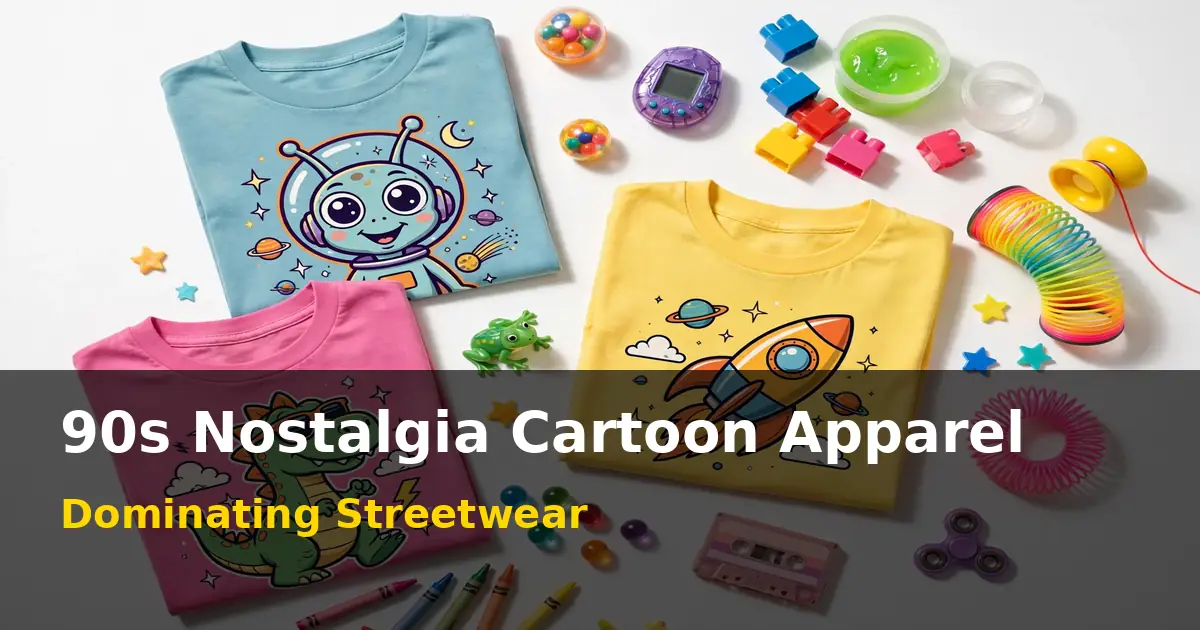
Walk down any metropolitan street today and you'll spot a slightly faded Rugrats oversized tee or a high-end hoodie featuring a 90s cartoon icon. Cartoon print apparel has completed the journey from niche geek culture to legitimate fashion — even high-fashion runways. This guide covers why the 90s cartoon aesthetic works, which franchises lead the trend, how to style cartoon prints like an adult, and what to know when buying vintage versus reproduction.
Table of Contents
Key Takeaways
- 90s cartoon apparel works because of contrast: playful graphics styled with grown-up tailoring.
- The era's visual language — neon shades, thick linework, maximalism — is instantly recognizable.
- Authentic vintage pieces carry cultural cachet; modern licensed pieces offer better fit and durability.
- The high-low styling strategy (loud graphic + structured basics) is the cheat code for wearing cartoon prints as an adult.
- Thrifting originals is the most sustainable way into the trend — and the most rewarding hunt.
Why the 90s, Why Now?
For Millennials, 90s cartoons represent a "pre-digital" innocence. For Gen Z, they represent a vibrant, chaotic aesthetic that contrasts sharply with the muted minimalism of the 2010s. The appeal is partly ironic — wearing a Care Bears shirt in a creative professional setting signals a specific confidence: serious about the work, not taking yourself too seriously.

The visual language itself does heavy lifting. Neon shades, thick linework, exaggerated proportions — the 90s design vocabulary of maximalism reads as joyful rebellion against a decade of "sad beige" restraint. It's not just about the show; it's about an entire era's design attitude.
From Saturday Mornings to Fashion Week
High fashion has officially entered the chat. Luxury houses have incorporated literal cartoon imagery into collections — when that happens, it validates the cartoon print as a legitimate design element rather than a novelty.
The 90s aesthetic is characterized by maximalism. Think all-over prints (AOP), acid washes, and heavy puff-print graphics. The period didn't believe in "less is more" — it believed more was better. On apparel, this translates to bold, dense graphics that demand attention.
The Franchises Leading the Trend
Not all cartoons carry equal fashion weight. The heavy hitters:
- Nickelodeon golden era: Rugrats, Rocko's Modern Life, Aaahh!!! Real Monsters — a "grotesque-cute" aesthetic that fits modern alternative fashion perfectly.
- Cartoon Network: Johnny Bravo, Dexter's Laboratory, Powerpuff Girls — leaning into the Y2K cyber aesthetic.
- 90s anime: Sailor Moon and Dragon Ball Z — pillars of the vintage oversized-tee movement in their own right.
- Counter-culture picks: Space Ghost Coast to Coast, early Beavis and Butt-Head — the ironic, counter-culture grails for collectors.
Vintage vs. Modern Reproductions
Should you hunt an original 1994 print or buy a modern licensed reproduction? Each has a real case:
- Authentic vintage (90s originals): unique fades, single-stitch hems, genuine cultural feel. Downsides: fragile fabric, hard to find in larger sizes, and genuinely rare pieces command serious prices on resale platforms.
- High-end designer collabs: premium materials and tailoring, luxury status. Downsides: expensive and can feel "too polished" for the aesthetic.
- Fast-fashion reproductions: affordable and widely available. Downsides: graphics peel quickly and the environmental cost is real.
- Bootleg/artisan prints: creative mashups supporting independent artists, often high-quality DTG printing. Downsides: inconsistent sizing and varying print quality.
For most people, the sweet spot is licensed modern pieces or artisan prints — the vintage look with a wearable fit.
Styling: The Contrast Trick
A cartoon shirt can go south fast if you're not careful. The trick is contrast: pair a playful, loud cartoon print with structural, muted pieces.
The High-Low Strategy
Tuck a vintage Looney Tunes tee into high-waisted pleated trousers. Add a structured blazer or leather trench. The juxtaposition of the "childish" graphic with "adult" tailoring creates sophisticated visual tension — it tells the world you understand fashion rules well enough to break them.
Footwear Matters
If the shirt is oversized, avoid clunky sneakers — opt for a clean silhouette like a Chelsea boot or minimalist white sneaker. For the full 90s skater look, chunky retros work, but keep the rest of the outfit simple to avoid the costume trap.
The Thrifting Economy
The rise of re-commerce platforms has turned the search for the perfect 90s cartoon hoodie into a global hunt — and it's a win for sustainability. Buying a shirt manufactured 30 years ago removes you from the fast-fashion cycle entirely.
Many collectors also argue 90s garments were simply built better: heavier cotton, screen-printing designed to last. A shirt from 1995 often has more structural integrity than a discount-mall shirt bought last week. Wash vintage prints inside out in cold water and never machine-dry — heat cracks screen prints and shrinks vintage cotton.
Print Techniques to Know
How the graphic gets onto the shirt matters as much as the graphic itself:
- Screen printing: the classic method. Layered inks, slightly textured feel, and the only way to get truly authentic "cracked" vintage prints. The gold standard for retro.
- DTG (direct to garment): digital printing directly onto fabric. Excellent for detailed, colorful artwork and small runs — the method behind most independent artist designs. Softer hand-feel than screen print.
- Puff print: raised, textured ink that literally pops off the fabric. A signature of 90s sportswear graphics — and a dead giveaway of the era when done right.
- All-over print (AOP): the graphic covers the entire garment, edge to edge. The most maximalist 90s format — and the rarest in true vintage, since few survived.
When buying, check product details for the print method. Screen print and puff print signal era authenticity; DTG signals modern independent production. Both are legitimate — what matters is that the method matches the aesthetic being sold.
Starting a Collection: A Practical Approach
If the hunt appeals to you, start smart:
- Learn the tags: era-specific manufacturer tags are the fastest authentication shortcut. Study what 90s tags look like before spending real money.
- Start with common grails: widely-produced 90s tees are affordable entry points that teach you what authentic single-stitch, faded cotton feels like.
- Condition over rarity: a common tee in excellent condition beats a rare one with holes and stains — unless you're specifically collecting "distressed."
- Measure, don't guess: vintage sizing runs small and inconsistent. Always check pit-to-pit and length measurements.
The Maximalism Playbook
The 90s didn't do subtle, and that's the whole point. The maximalist design playbook of the era has specific ingredients worth understanding — whether you're buying, styling, or designing:
- Neon and saturation: slime greens, hot pinks, electric blues. The 90s palette was calibrated for Saturday-morning TV, not minimalism.
- Thick linework: bold cartoon outlines that read clearly from across the street — essential for apparel graphics.
- Layered chaos: multiple graphic elements competing for attention — stars, bursts, zigzags, characters — arranged with deliberate density.
- Texture: halftone dots, grain, and distressing that give flat prints a tactile, printed-matter feel.
Understanding these ingredients helps you judge quality: a good 90s-style graphic commits to the chaos with confidence. A bad one looks like random clip art — busy without intention.
Where to Hunt Originals
The best sources for authentic 90s cartoon apparel, ranked by effort-to-reward ratio:
- Estate sales and flea markets: the highest highs and lowest lows. Patience required, but the prices are unbeatable when you score.
- Dedicated vintage stores: curated selection at a markup — you're paying for someone else's hunting time and authentication eye.
- Re-commerce platforms: the largest selection with search filters, but prices reflect what sellers know they have. Learn to spot underpriced listings.
- Thrift stores: still the classic. Go often, go early, and check the t-shirt wall first — cartoon tees move fast.
Frequently Asked Questions
What makes a 90s cartoon shirt "vintage"?
Clothing is generally considered vintage at 20+ years old. Collectors look for single-stitch hems (one line of thread on sleeve/waist) and era tags like Giant, Brockum, or Winterland.
Why are some 90s cartoon shirts so expensive?
Scarcity and cultural relevance. Few all-over-print shirts survived three decades in good condition, and demand from collectors and celebrity wear has driven resale prices up significantly.
How can I tell if a shirt is a modern reprint or an original?
Check the tag: modern reprints often have printed-on neck labels, originals have physical fabric tags. Also check the copyright date under the graphic — though some retro-style shirts include the original date for aesthetics.
Is cartoon apparel appropriate for the office?
In creative industries, yes — styled with elevated pieces like blazers or smart trousers. In traditional corporate environments, save it for casual Fridays.
How do I wash vintage cartoon prints without ruining them?
Always wash inside out in cold water on a delicate cycle. Never put them in the dryer — heat cracks screen prints and shrinks vintage cotton. Air dry only.
Related reading: our retro designs master guide, the oversized vintage tee guide, and the thrift-shop graphic tee roundup — or browse AIPrintVerse designs.