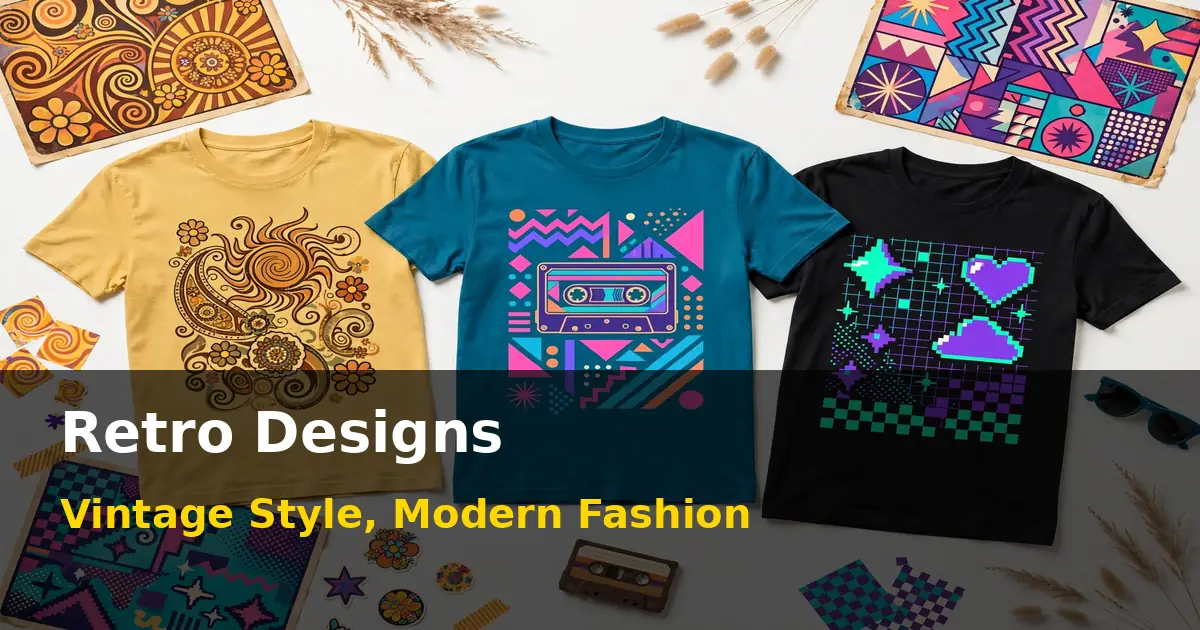
"Everything old is new again" isn't just a cliché — it's the most reliable cycle in fashion. Retro designs — new garments that deliberately echo styles from past decades — have moved from niche thrift-store finds to the center of modern wardrobes. This guide covers why the comeback happened, the design lanes each decade offers, how to style retro without looking like you're in costume, and how to spot quality when buying.
Table of Contents
Key Takeaways
- Retro = new clothing made to look like the past (at least 20 years back); vintage = actually made in that era.
- The 70s, 80s, 90s, and Y2K each offer a distinct visual language — pick one dominant era per outfit.
- The 70/30 rule (70% modern, 30% retro) keeps the look intentional, not costumey.
- Fabric weight, garment dyeing, and print texture are the quality markers that separate good retro from cheap imitation.
- Retro aesthetics give social messages (like kindness apparel) an approachable, sincere feel.
Why Retro Design Is Back
Trend cycles run roughly 20 to 30 years, which puts the 90s and early 2000s squarely in the revival window right now. But cycles alone don't explain the scale of the current comeback. The deeper driver is emotional: in uncertain times, people gravitate toward aesthetics that feel familiar and comforting. A 70s bubble font or a faded 90s band-tee graphic carries a sense of optimism and cultural confidence that feels refreshing against today's hyper-digital minimalism.
The other factor is texture. Modern fashion spent a decade on sleek, synthetic, "clean" aesthetics. Retro design offers the opposite — grain, noise, halftone dots, cracked screen prints, heavyweight cotton. People are craving things they can feel, and retro delivers that tactility.
Retro vs. Vintage: The Definitions
The terms get swapped constantly, but they mean different things:
- Vintage: items actually produced in a past era (roughly 20–100 years ago). A tee printed in 1992 is vintage.
- Retro: new items made to look like they're from the past. A tee printed in 2026 with a 1992-style graphic is retro.
- Reproduction (repro): a retro subset that aims to replicate a specific historical garment as accurately as possible.
For most wardrobes, retro is the practical choice — better size availability, modern fabric technology, and none of the fragility of 30-year-old cotton.
Design Lanes by Decade
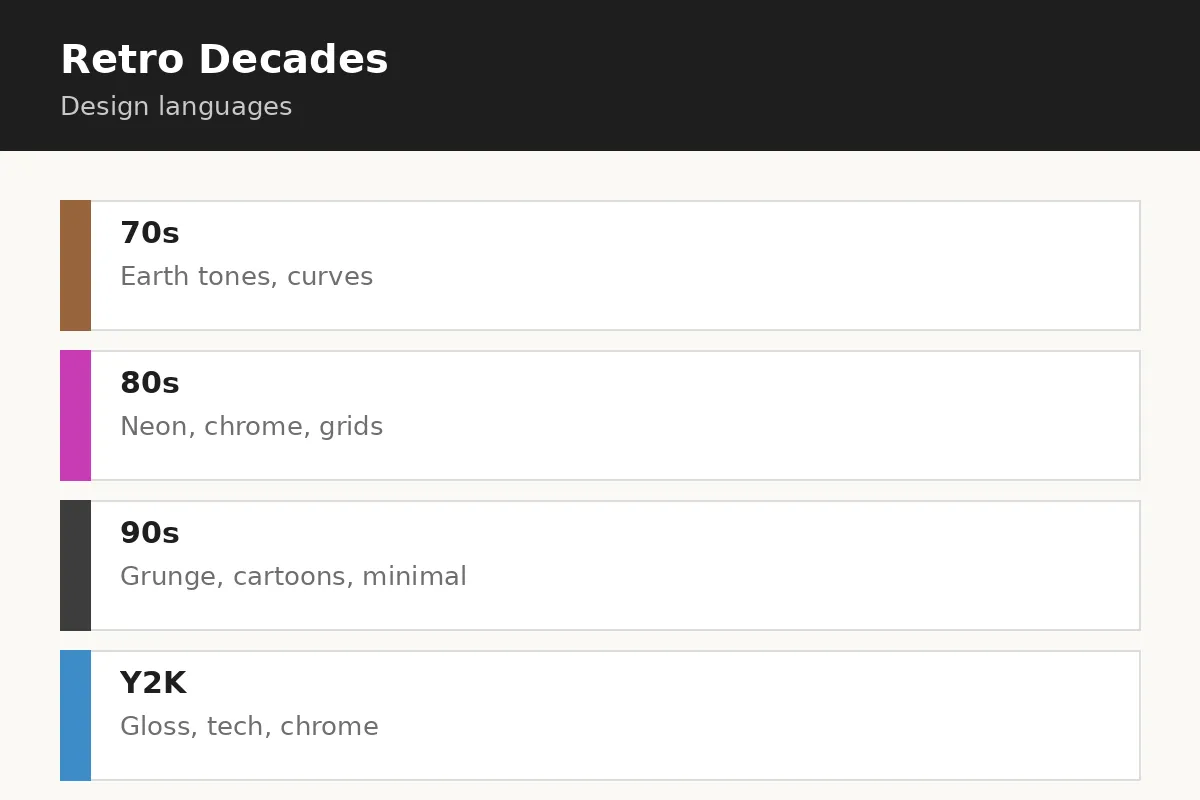
Each era has a visual language. Learning to recognize them is the core skill of retro styling.
The 70s: Warmth and Flow
Organic shapes, heavy serifs like Cooper Black, flower-power motifs, and earth tones — mustard, burnt orange, avocado. The 70s lane feels grounded and communal, and it's the backbone of the current "kindness apparel" wave.
The 80s: Neon and Geometry
Memphis-style squiggles, chrome gradients, neon pink on black, pixel fonts. Loud and synthetic — the energy of early techno-optimism. Works best as a single statement piece per outfit.
The 90s: Anti-Design and Grunge
Distressed typography, torn-paper textures, halftone dots, oversized silhouettes. The 90s lane is currently the most dominant in streetwear, partly because its "rebellion against polish" fits the mood of the moment.
Y2K: Techno-Optimism
Holographic effects, icy blues, bubble fonts, metallic sheens. The early-2000s aesthetic represents optimism about the internet age — and it's the lane Gen Z is discovering firsthand.

"1985 Retro Birthday" Sweatshirt
A genuine 80s-style retro design — bold year typography with that sun-faded, vintage-wash feel. A clean example of the era's visual language done right. Pick your garment on the product page.
View on Redbubble →The Kindness Angle: Retro as Message
One of the more interesting sub-trends: retro aesthetics are being used to carry social messages — "Kindness Is Cool," "Be Kind" — in groovy 70s typefaces with distressed prints. There's a reason this works. A slogan in a bubbly retro font on cream cotton feels sincere; the same slogan in a sharp modern serif can feel ironic or preachy.
The retro wrapper does two things: it signals warmth and community (the 70s are associated with grassroots movements and analog togetherness), and it gives the message "cool" cover — the distressed print and earthy palette make earnestness fashionable rather than cheesy. If you're buying in this lane, apply the same quality rules: heavyweight cotton, garment-dyed blanks, and production ethics that match the message.
Styling Rules: Avoid the Costume Look
The difference between "retro" and "costume" comes down to three rules:
- The 70/30 rule: keep 70% of the outfit modern, 30% retro. A vintage-style graphic tee with modern jeans and clean sneakers reads intentional; full period dress reads theatrical.
- One dominant era: mixing a 20s headband with 80s leggings looks messy. Pick one decade and let the rest of the outfit stay neutral.
- Modern grooming: contemporary hair and minimal accessories signal that the retro piece is a choice, not a time warp.
Accessories are the lowest-risk entry point — a retro-patterned scarf, era-specific sunglasses, or a single graphic tee let you test a lane before committing to a full aesthetic.
Buying Guide: Quality Markers
Cheap retro is everywhere; good retro has tells. Look for:
- Fabric weight: 200+ GSM for that structured vintage drape. Thin fabric ruins the illusion instantly.
- Garment dyeing: dyed after sewing, giving a softer feel and washed-out seams that take years to develop naturally.
- Print texture: screen prints with slight cracking or a soft hand-feel look authentic; stiff, plastic-feeling prints look cheap.
- Details: ribbed collars, single-needle stitching, and era-accurate tags (or no branding at all) separate thoughtful repros from fast-fashion copies.
Retro also earns sustainability points when done right — a well-made retro piece with timeless appeal gets worn for years instead of a season, which is the whole point of "slow" fashion.
Where to Buy Retro Designs
The retro market has clear tiers, and each serves a different buyer:
- Thrift and vintage stores: the most authentic source for actual vintage, and the cheapest entry into retro aesthetics. The hunt is the point — and the finds are one of a kind.
- Re-commerce platforms: online marketplaces dedicated to vintage and secondhand fashion. Better selection than a single thrift store, with seller ratings and authentication on higher-end pieces.
- Retro-specialist brands: labels that build their entire identity around reproduction — garment-dyed blanks, era-accurate graphics, heavyweight fabrics. The most reliable way to get the look with modern sizing.
- Print-on-demand marketplaces: independent artists selling retro-inspired originals. The widest variety of niche designs, from obscure decade references to mashups that never existed historically.
- Mainstream retailers: fast-fashion "vintage-inspired" lines. Affordable and accessible, but check fabric weight and print quality — thin blanks and plastic-feeling prints are common.
Whichever tier you shop, apply the quality markers from the buying guide above. A 200+ GSM blank with a soft-hand print beats a thin shirt with a stiff graphic at any price point.
Common Mistakes to Avoid
- Too many eras at once: the single most common failure. A 70s jacket plus 90s jeans plus Y2K accessories reads as costume, not style.
- Ignoring fit: retro doesn't mean shapeless. Even oversized pieces should be intentionally cut — check shoulder seams and overall proportions.
- Fake distressing: pre-distressed graphics can look great when done well, but cheap "cracked" prints that feel like sandpaper just look damaged.
- Neglecting the rest of the outfit: a great retro tee with worn-out shoes and ill-fitting jeans doesn't work. The 70/30 rule applies to the whole look, not just the hero piece.
Frequently Asked Questions
What makes a design "retro"?
A design is retro if it's newly made but intentionally mimics the styles, colors, and aesthetics of a previous era — typically at least 20 years old.
Is retro fashion still in style for 2026?
Yes. The 90s grunge/minimalist lane and Y2K aesthetics are the current leaders, with 70s boho-chic running strong alongside them. Nostalgia-driven fashion remains a leading trend.
How do I wear retro without looking like I'm in a costume?
Use the 70/30 rule: one retro piece with modern essentials. Stick to one dominant era per outfit, and keep hair and accessories contemporary.
What's the difference between retro and vintage clothing?
Vintage was actually made in the past era; retro is newly made to look like it. For daily wear, retro usually wins on fit, fabric technology, and durability.
What are the most popular retro colors?
The muted earth tones of the 70s (mustard, avocado, rust), neon pinks and teals of the 80s, and the faded primaries of 90s grunge are the current leaders.
For more on the era-specific side, see our 90s nostalgia cartoon apparel guide, the retro streetwear brands guide, and our thrift-shop graphic tee roundup — or browse AIPrintVerse designs for retro-inspired originals.