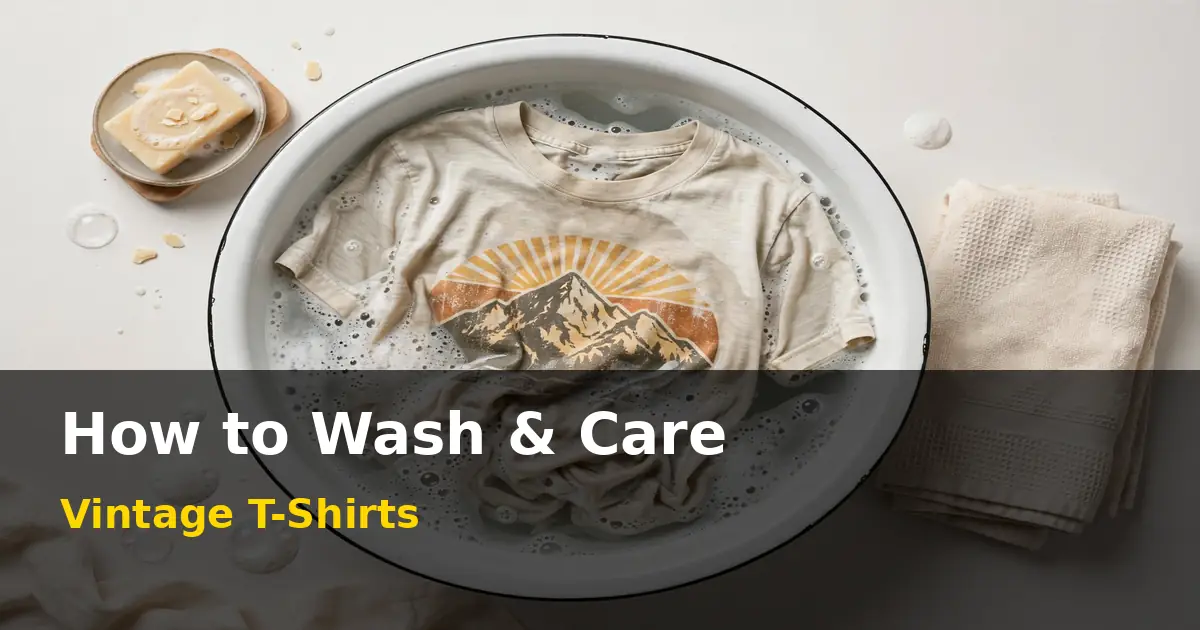
A vintage t-shirt is not just an old shirt. The cotton has thinned over decades, the screen-print ink has gone brittle, and the dyes in some eras are chemically unstable. Wash it like a modern tee and a single cycle can crack the graphic, stretch the neckline, or — in the worst case — disintegrate the fabric entirely. This guide covers the full lifecycle of vintage tee care: how to wash, dry, store, de-stain, and even shrink vintage shirts without destroying what makes them valuable.
Table of Contents
Why Vintage Tees Need Different Care
Most collectible tees from the 70s through the 90s are 100% cotton or 50/50 cotton-polyester blends, printed with plastisol or water-based inks. Decades of wear, washing, and light exposure have changed all three components:
- The fabric is thinner. That beloved paper-thin feel is the result of gradual fiber loss. Aggressive agitation that a new shirt shrugs off can tear a 40-year-old one.
- The ink is brittle. The plasticizers in old screen-print ink slowly escape over time, leaving the graphic rigid. Bend it sharply — in a hot dryer, say — and it cracks.
- Some dyes are unstable. Certain black shirts from the late 80s and early 90s were dyed with sulfur-based dyes that can cause "dry rot," a chemical breakdown of the cotton itself.
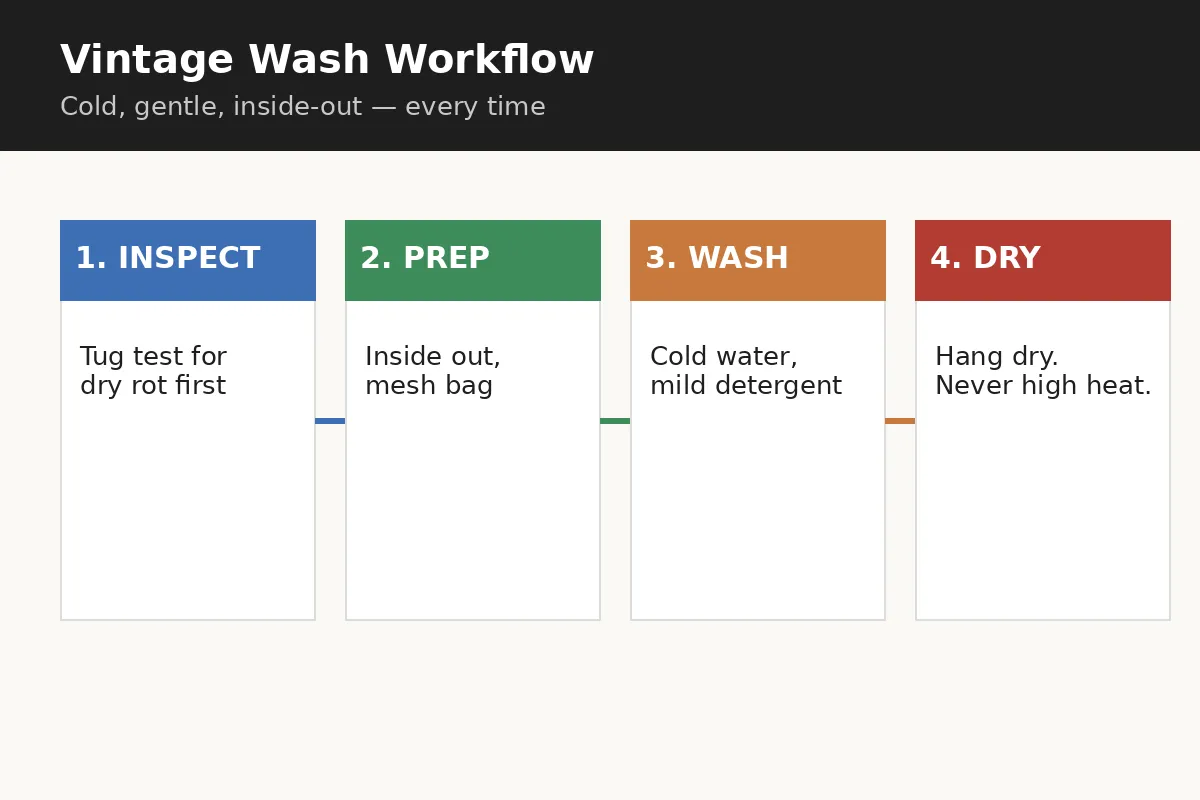
The tug test: before washing any questionable shirt, gently tug the hem. If the fabric tears with a papery sound, it has dry rot — washing will only accelerate its disintegration. Treat it as a display piece, not a wearable.
For everything else, care comes down to managing three enemies: heat, friction, and harsh chemicals. If you're new to collecting, start with our guide to finding, styling, and valuing vintage t-shirts — then come back here before the first wash.
Washing: The Gentle Method
Hand washing is the safest way to clean a vintage tee. It takes fifteen minutes and eliminates the two biggest risks of machine washing: mechanical agitation and uncontrolled heat.
- Prep the basin. Fill a clean sink or plastic tub with cool to lukewarm water. Never hot.
- Add mild detergent. A teaspoon of pH-neutral delicate soap (the kind sold for delicates or wool) is enough. Avoid heavy-duty detergents — their enzymes and brighteners are designed to attack organic matter, which includes old ink binders and fragile cotton.
- Turn the shirt inside out. This keeps the print from rubbing against the basin or itself.
- Soak 15–20 minutes. Let the water do the work. Don't scrub the print. For underarm discoloration, gently rub the fabric against itself in that spot only.
- Rinse in cool water. Drain, refill, and press the shirt to push soap out. Never wring or twist — aged fibers snap under torsion.
Wash as rarely as you can. Every full wash cycle moves a vintage shirt closer to retirement. If it isn't visibly dirty and doesn't smell, spot-clean the mark or refresh it with a garment steamer instead.
Machine Washing (If You Must)
Sometimes you have a stack of shirts and no time for the sink. If you must use a machine, reduce the risk:
- Use a mesh laundry bag. This is the single best investment for a vintage collector. It stops sleeves tangling with other garments and limits how hard the fabric gets pulled.
- Delicate cycle, lowest spin, cold water. High spin speeds press the shirt against the drum and stretch necklines permanently.
- Wash with similar colors. A white 1990 tee will happily absorb indigo dye from your jeans.
- Skip the fabric softener. Softeners coat fibers in waxes and oils. On a print, that coating builds up, attracts dirt, and can eventually make the ink peel away from the cotton.
Drying: Heat Is the Enemy
You can wash perfectly and still ruin a shirt in the dryer. Tumbling combines friction with high heat — cotton fibers contract while plastisol ink softens and shifts, which is exactly how prints crack and lift.
- Lay flat to dry. Reshape the damp shirt with your hands on a clean towel or drying rack. Hanging a heavy wet vintage tee stretches the shoulders and neckline, often permanently.
- Keep it out of direct sun. UV fades dyes fast. Dry indoors or in shade.
- Speed it up safely. A fan pointed at the rack cuts drying time without any heat damage.
If you absolutely must use a dryer, use the lowest heat setting, keep the shirt inside out, pull it out slightly damp, and finish flat. Never run a full hot cycle on a shirt you care about.
Stain Triage for Old Shirts
Found a grail with yellowed pits or a decades-old mystery stain? Work from gentle to strong, and test on a hidden area first.
- Never use chlorine bleach. It weakens cotton fibers and can turn white shirts a sickly yellow. This is the fastest way to destroy a vintage tee.
- Organic stains: make a paste from oxygen-based (chlorine-free) stain remover and a little water, apply with a soft toothbrush to the stain only, let sit up to an hour, then rinse. Don't soak overnight — prolonged exposure to oxygenating agents can loosen the bond between ink and fabric.
- Grease: a drop of dish soap breaks down oils without harming screen print.
- Musty thrift-store smell: soak in cool water with a cup of distilled white vinegar. It neutralizes odor-causing bacteria without damaging the print, and the vinegar smell disappears as the shirt dries.
Long-Term Storage
Most vintage collections die from neglectful storage, not from wear. Body oils, light, heat, humidity, and pests all keep working while a shirt sits in a drawer.
Never store dirty
Skin oils and perspiration trapped in fibers feed moths and silverfish, and they oxidize into the yellow stains that become permanent after a few years. Wash (gently, per above) before any long-term storage.
Fold, don't hang
Gravity pulls a hanging shirt down on its shoulder seams for years, creating hanger bumps or tearing thin fabric. Fold loosely and flat — tight rolls can crack old plastisol prints. If you must hang for display, use wide padded hangers, never thin wire ones.
Control the environment
Think cool, dark, and dry: an interior closet beats a hot attic or damp basement every time. UV light — even indoor fluorescent light over long periods — bleaches dyes and breaks down fibers. Aim for stable, moderate conditions; big swings in temperature and humidity make fibers expand and contract, causing internal wear.
Use the right materials
Slip a sheet of acid-free tissue paper inside the shirt so the front and back graphics can't touch — this prevents ink transfer, where warm plastisol sticks to itself. Regular paper and cardboard contain acids that yellow fabric over time, so avoid them. For high-value pieces, archival acid-free boxes are the gold standard; breathable cotton bags work for daily-wear vintage. Plastic bins are fine short-term but can trap moisture and off-gas chemicals — never vacuum-seal a printed vintage tee, which permanently creases the fabric and ruins prints.
Keep pests out
Skip mothballs — the smell embeds in vintage fibers and the chemicals are harsh. Cedar blocks or lavender sachets deter pests without residue, and silica gel packets (kept off the fabric) stabilize humidity inside bins. Inspect stored shirts every 6–12 months for pests, mold, or moisture.
Shrinking a Vintage Tee Safely
Found the perfect graphic in the wrong size? Heat shrinking works, but it's a one-way street — once fibers contract, stretching them back usually distorts the shirt. Run this checklist first:
- Check the fabric. 100% cotton shrinks readily; 50/50 polyester blends barely shrink at all, because polyester is heat-set. Forcing a blend with extreme heat can scorch it, leaving a shiny, brittle finish.
- Check the stitching. Pre-90s single-stitch shirts have delicate old thread that high heat can snap, unraveling seams.
- Check the print. Brittle, cracked plastisol can flake off in a hot dryer. If the graphic is already fragile, don't risk heat.
- Be realistic about size. Heat takes a shirt down roughly one size at most. If you need two sizes smaller, see a tailor — a professional taper keeps the original stitching and doesn't touch the print.
The controlled method: wash hot on a sturdy cycle with the shirt inside out in a mesh bag, then dry on high heat, checking every 10 minutes. Pull it out slightly damp to avoid a crunchy hand-feel. For maximum shrinkage on 100% cotton, some collectors use the hot-water soak method — submerge in just-boiled water (off the heat) for 15–20 minutes — but this carries the highest risk of color bleeding, so reserve it for sturdy shirts you can afford to lose.
Protect the graphic during any heat shrink: always inside out, always in a mesh bag, and if the print feels sticky afterward, lay the shirt flat immediately — never fold it warm, or the graphic can stick to itself and peel.
Care Mistakes That Destroy Prints
- Hot dryer on a full cycle — the number one print killer. Cracks ink and shrinks cotton unevenly.
- Ironing directly on the graphic — melts plastisol instantly. Use a steamer, or iron inside out on low with a cloth barrier.
- Chlorine bleach — weakens fibers and yellows whites.
- Wringing out a wet vintage shirt — snaps aged fibers. Press or roll in a towel instead.
- Storing dirty in a hot attic — oils oxidize into permanent stains while heat accelerates fiber breakdown.
- Dry cleaning a printed tee — the solvents can dissolve old inks. It's meant for tailored garments, not screen prints.
Looking for vintage-style graphics on fresh blanks that don't need archival care? Browse our designs collection — the same aesthetics, none of the fragility.
Frequently Asked Questions
Can I use fabric softener on vintage t-shirts?
No. Fabric softeners coat fibers in waxes and oils that build up on screen prints, attract dirt, and can eventually cause the ink to peel away from the cotton. Use a mild detergent and skip the softener.
How do I get the musty thrift-store smell out of a vintage shirt?
Soak it in cool water with a cup of distilled white vinegar before washing. The vinegar kills odor-causing bacteria without damaging the print, and its own smell disappears once the shirt dries.
How often should I wash my vintage tees?
As rarely as possible. Every wash cycle shortens a vintage shirt's life. If it isn't visibly dirty and doesn't smell, spot-clean the mark or refresh it with a garment steamer instead of a full wash.
Is it safe to iron a vintage screen print?
Never iron directly on the print — the heat melts plastisol ink. Use a handheld steamer instead. If you must iron, turn the shirt inside out, use the lowest heat setting, and keep a cloth between the iron and the fabric.
What is dry rot, and can it be fixed?
Dry rot is irreversible chemical breakdown of cotton fibers, common in certain sulfur-dyed black shirts from the late 80s and early 90s. If the fabric tears like paper when gently tugged, it cannot be saved — treat the shirt as a display piece and don't wash it.
Can I shrink a 50/50 blend vintage shirt?
Barely. Polyester is heat-set and resists shrinking, so expect only a slight size reduction compared to 100% cotton — and aggressive heat risks scorching the blend. For a real size change on a blend, a tailor is the safer option.