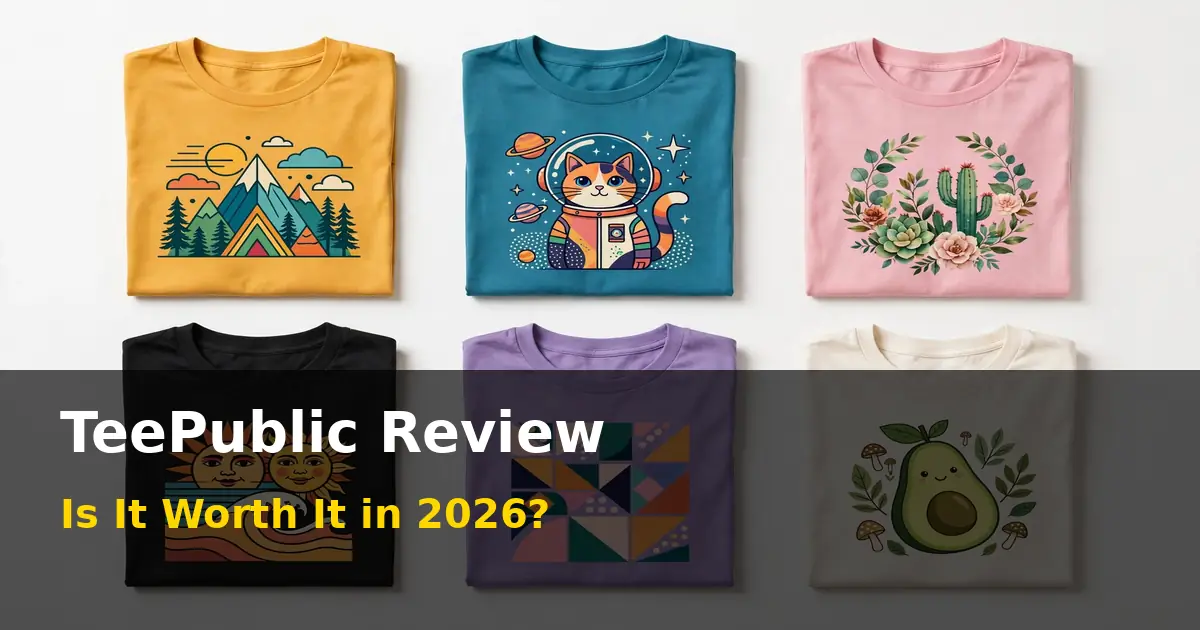
TeePublic is one of the largest print-on-demand marketplaces for independent artists, with a loyal audience for niche, pop-culture-adjacent and hobby designs. But between its account classification system, fixed artist margins and frequent site-wide sales, sellers often ask a fair question: is TeePublic still worth it in 2026? This review walks through how the platform works for sellers, gives an honest pros-and-cons breakdown — including what buyer reviews actually say — explains who it suits best, and lays out the steps to get started.
Table of Contents
Key Takeaways
- TeePublic is a free, hands-off POD marketplace: you upload designs, they print, ship and support the orders.
- Artist earnings are fixed per sale and shrink during frequent site sales — margin control is not in your hands.
- An account classification system (Artisan vs Apprentice) affects visibility and earnings potential.
- Best suited to niche artists seeking passive marketplace income — not to brand builders who need pricing control.
What Is TeePublic?
TeePublic is a print-on-demand marketplace where independent artists upload designs that get printed on t-shirts, hoodies, stickers, mugs, phone cases and more. Founded in 2013 and acquired by Redbubble in 2018, it has built a distinct identity around "geek culture" — niche fandoms, parody-adjacent art, obscure hobbies and highly specific humor.
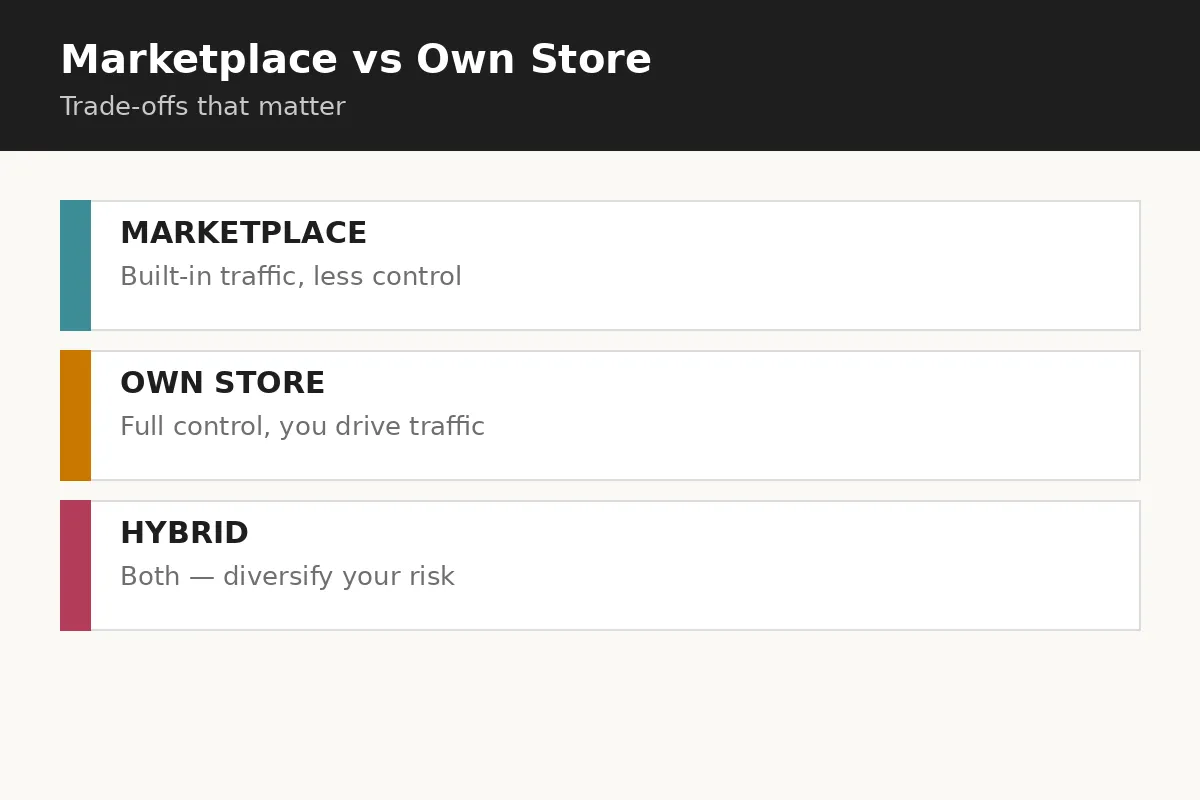
Unlike platforms where you bring your own traffic (Shopify plus a print provider), TeePublic is a marketplace: buyers arrive through the platform's own search and category browsing. That built-in audience is the main attraction. The trade-off is that you sell inside TeePublic's ecosystem — you don't control product pricing, packaging, or the customer relationship.
It is also worth knowing the buyer-side reputation. On independent review sites, TeePublic's customer reviews are polarized: many buyers praise the design variety and responsive support for order mistakes, while others report shipping delays and inconsistent print quality. As a seller, that matters because your designs ride on the platform's fulfillment — good designs can still suffer from someone else's printing inconsistency.
How It Works for Sellers
The seller workflow is genuinely one of the simplest in the industry:
- Upload one high-resolution PNG. A transparent background is essential — artwork with a white box around it looks amateurish on dark garments.
- Let the uploader map it across products. TeePublic automatically places your design on apparel, stickers, mugs and more; you can adjust placement and default garment colors.
- Tag thoroughly. You get a limited set of tags — use specific, buyer-like phrases ("retro space cat", "vaporwave aesthetic") rather than single generic words.
- Organize your storefront. Curated collections ("Cyberpunk Series", "Vintage Botany") help buyers navigate once you have dozens of designs.
- Get paid monthly. Earnings are paid out via PayPal or Payoneer, typically mid-month for the previous month's sales.
The account classification system
TeePublic classifies artist accounts into tiers — broadly, higher-trust accounts and newer or less-curated ones. The classification affects both your search visibility and your per-sale earnings: higher-trust accounts earn the platform's standard fixed margin per sale, while lower-tier accounts earn noticeably less for the same product. TeePublic has described the system as a way to reward original, high-quality work and filter low-effort uploads. Practically, the lesson is the same one that works everywhere: cohesive, original work in real niches is the fastest route to the better tier.
Fixed margins and the sale problem
You do not set your own prices on TeePublic — you earn a fixed artist margin per sale. And TeePublic runs frequent site-wide sales, which is great for buyers but means your margin per unit drops during sale periods. Sellers who treat TeePublic as a volume game (many designs, many small margins) fare better than those expecting large per-unit profits.
Pros and Cons: An Honest Breakdown
Pros
- Completely free to start. No listing fees, no subscriptions — you only earn when something sells.
- Truly hands-off. Printing, shipping, returns and customer support are TeePublic's problem, not yours.
- Built-in niche traffic. The platform's audience actively searches for the exact kind of niche and fandom-adjacent designs independent artists make.
- Fastest uploader in the business. One upload populates dozens of products in seconds.
- Fan art program. TeePublic (with Redbubble) runs a formal program letting approved artists sell licensed designs for partnered brands — a legal route into fandom merchandising.
Cons
- No pricing control. You can't raise margins on a winning design or run your own pricing strategy.
- Frequent sales compress earnings. Your per-sale margin shrinks whenever the platform discounts — which is often.
- No customer ownership. You get no buyer emails, no brand experience, no packaging — nothing to build a business on beyond the marketplace.
- Opaque classification. The criteria and review process for account tiers are not public, which frustrates new sellers earning lower rates.
- Fulfillment inconsistency. Buyer reviews show real variability in print quality and shipping times — your reputation is partly in third-party printers' hands.
- Competition is intense. Low barriers mean every viable niche already has hundreds of listings; standing out requires volume and sharp tagging.
Who TeePublic Is Best For (and Who Should Skip)
TeePublic is a good fit if you: make niche, fandom-adjacent or hobby art; want genuinely passive marketplace income; are testing which designs resonate before investing in your own store; or want a legal channel for licensed fan art.
Look elsewhere if you: need high per-unit margins; want to build a brand with your own pricing, packaging and customer list; or plan to make POD your primary business — in that case, a print provider plus your own storefront (or a platform with adjustable margins) serves you better. TeePublic works best as one channel in a wider strategy, not as the entire business.
For a contrasting model with adjustable pricing and your own storefront, compare with Amazon Merch on Demand and our broader print-on-demand business guide.
What Sells: Niche Patterns That Work
TeePublic's audience has clear tastes. Designs that perform tend to share a few patterns — understanding them before you upload saves months of trial and error.
- Fandom-adjacent art (done legally). The platform's core audience loves pop-culture-adjacent designs — but the safe route is the official fan art program or clearly original parody-free work, never unlicensed IP.
- Specific animals, not "animals". A design for a single dog breed or a specific cat personality outsells generic pet art, because buyers search for their own pet.
- Professions and hobbies as identity. Nursing, gaming, fishing, teaching — identity-expressive designs convert because people buy shirts that say who they are.
- Retro and vintage aesthetics. Distressed textures, 70s lettering and nostalgic illustration styles have a durable audience on the platform.
- Readable at thumbnail size. Most buyers discover designs in small search-result thumbnails. Bold shapes, high contrast and short text win; fine detail that only shows at full size does not.
A practical split many sellers use is roughly 70% evergreen designs (professions, hobbies, aesthetics that sell year-round) and 30% trend-responsive designs (memes, seasonal moments). Trends bring bursts of traffic into your shop; evergreens keep baseline sales flowing between them. Whichever you make, specificity beats generality — a shirt for "left-handed bass players" will find its buyers faster than a shirt for "music lovers".
Getting Started: Step by Step
- Sign up as an artist. It's free; you'll need a PayPal or Payoneer account for payouts and tax information for your country.
- Prepare 5–10 strong designs. Start with your best work in one or two related niches — a cohesive opening shop looks far better than a random assortment.
- Upload with transparent PNGs. High resolution, transparent background, centered artwork; preview on both light and dark garments.
- Tag like a buyer. Use all available tag slots with specific multi-word phrases; include the niche, the style and the occasion.
- Use the 72-hour window. New uploads get an automatic introductory sale — share the link on Pinterest, Instagram or relevant communities to seed early traction, which helps search ranking.
- Publish consistently. Marketplaces reward catalog depth; a steady upload rhythm across niches beats occasional bursts.
- Track and double down. Watch which designs get views and sales, then create variations and companions for the winners.
Frequently Asked Questions
Is TeePublic free for artists?
Yes. There are no listing fees or monthly subscriptions. TeePublic takes its share from each sale and you receive a fixed artist margin based on your account classification.
How do TeePublic payments work?
TeePublic pays artists via PayPal or Payoneer, typically around the middle of each month for the previous month's sales. You are responsible for declaring the income for tax purposes in your country.
What is the difference between the account types?
TeePublic classifies accounts into tiers that affect search visibility and per-sale earnings. Higher-trust accounts with original, quality work earn the standard margin; newer or less-curated accounts earn less. Building a cohesive, original portfolio is the practical route to the better tier.
Can I sell fan art on TeePublic?
Yes, through TeePublic's formal fan art program (shared with Redbubble). You can submit designs for partnered brands, and if approved you can sell them legally — though the brand takes an additional share of the earnings.
Do I keep ownership of my designs?
Yes. You retain ownership of your artwork and grant TeePublic a non-exclusive license to print and sell it on their products. You can sell the same designs on other platforms.