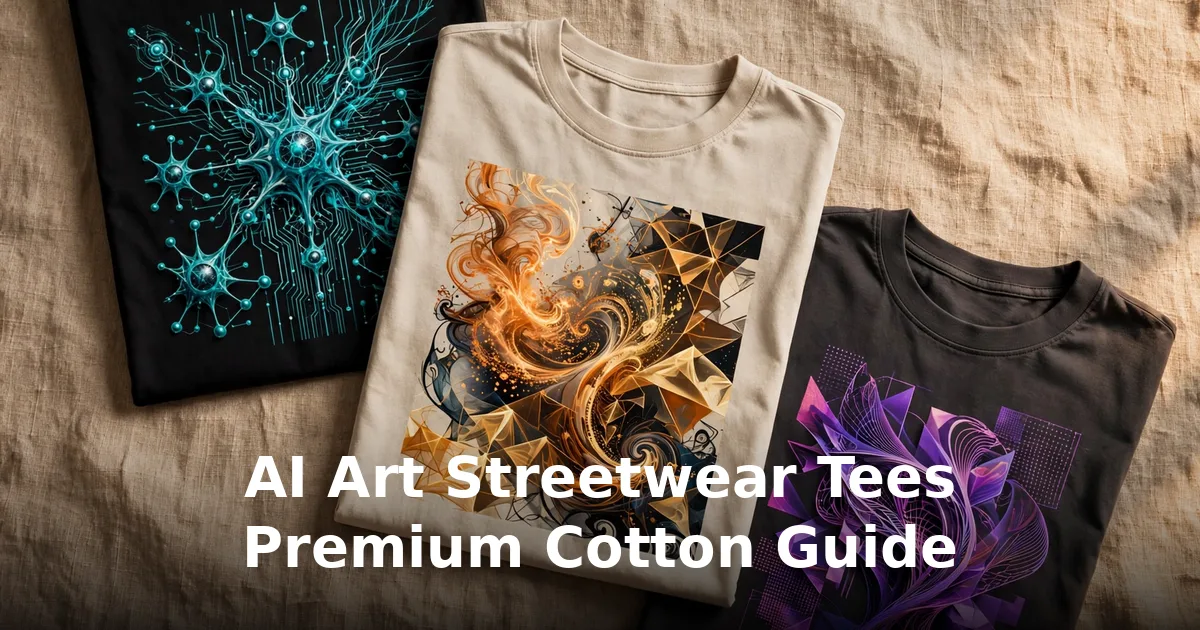
Streetwear has always been a conversation between art and garment: the tee is the canvas, the graphic is the statement. Generative AI added a new voice to that conversation — designs no human would have drawn, at a volume no studio could match. But the algorithms only solved half the equation. A breathtaking AI design printed on a flimsy, scratchy blank still feels like fast fashion. This guide covers the other half: what "premium cotton" actually means, which blanks and fits suit streetwear aesthetics, how AI art prints best on fabric, and how to buy or produce AI-art tees without getting burned.
Table of Contents
- What "Premium Cotton" Actually Means
- Fabric Weight: Lightweight vs. Heavyweight
- Streetwear Fits: Oversized, Boxy, and Relaxed
- Why AI Art Fits the Streetwear Aesthetic
- Best Print Methods for AI Designs
- How to Style AI-Art Graphic Tees
- A Buyer's Checklist Before You Pay
- Care: Keeping Prints and Cotton Alive
- Frequently Asked Questions
Key Takeaways
- "Premium cotton" means combed, ring-spun construction — not just a higher price tag.
- Heavyweight blanks (around 200+ GSM) give the structured drape streetwear styling needs.
- Oversized and boxy fits are the current streetwear standard; size up one on classic-fit blanks.
- DTG is the best print method for detailed AI art on cotton — check our DTG for AI artwork guide for the technical side.
Fabric Weight: Lightweight vs. Heavyweight
Fabric weight, measured in GSM (grams per square meter) or ounces per square yard, controls drape and structure. Standard tees sit around 140–160 GSM (4.1–4.7 oz) — soft and drapey, but thin enough to cling and show through. Heavyweight streetwear blanks run roughly 200–240 GSM (6–7 oz): they stand away from the body, hold a structured silhouette, and feel substantial — the "beefy tee" look that defines modern streetwear.
Which to choose depends on the aesthetic. Heavyweight is the streetwear default: it gives oversized fits their shape and reads premium even in plain colorways. Midweight (around 170–190 GSM) is the versatile middle ground for everyday wear. Ultra-lightweight blanks photograph beautifully but wrinkle fast and suit fitted, minimal styling rather than streetwear. One caveat: heavyweight cotton shrinks more noticeably, so check for "pre-shrunk" or "garment-dyed" in the specs if you are between sizes.
Streetwear Fits: Oversized, Boxy, and Relaxed
The streetwear silhouette of 2026 is built on oversized and boxy cuts: dropped shoulders, wider bodies, and lengths that hit below the hip. If you are buying a classic-fit tee and want the streetwear look, sizing up one size is the standard move — but dedicated streetwear blanks are cut boxy from the start, so they keep their proportions (shoulder seam placement, sleeve length) rather than just getting longer.
Fit terminology worth knowing: "classic fit" is the old regular cut; "relaxed fit" adds room through the body; "oversized" and "boxy" are intentional streetwear cuts; "heavyweight" describes fabric, not fit — a heavyweight tee can still be a classic fit. Pair oversized tops with straight or wide-leg bottoms to balance proportions; head-to-toe baggy works too, but keep one element (footwear, accessories) crisp so the outfit reads intentional rather than borrowed. For more styling frameworks, see our streetwear style guide and graphic tee styling guide.
Why AI Art Fits the Streetwear Aesthetic
Streetwear graphics have always prized the surreal, the maximal, and the unexpected — glitch art, distorted typography, dreamlike collages, impossible creatures. Generative AI produces exactly that visual language at scale: hyper-detailed dreamscapes, chrome-and-neon cyberpunk scenes, and baroque mashups of styles that would take a human illustrator weeks. The match is natural.
There is a craft dimension, though. The best AI-art tees are not raw generator outputs slapped on a shirt. Strong pieces share a few traits: a coherent palette (AI art often needs color grading to sit well on fabric), intentional composition (negative space around the subject so the design breathes on the chest), and print-aware sizing (AI's fine detail needs a large enough print area — a 4-inch pocket print wastes a 3000-px file). If you are designing your own, our AI t-shirt design guide covers the full workflow, and our concept-to-print guide covers the fundamentals that AI does not automate.
Best Print Methods for AI Designs
Not every print method flatters AI art. DTG (direct-to-garment) is the default for detailed AI graphics on cotton: unlimited colors, smooth gradients, soft hand-feel, and no minimum order. Screen printing suits bold, limited-color streetwear graphics and large runs, but it flattens AI's subtle gradients into halftone dots — great for a vintage look (see our distressed typography guide), wrong for photorealistic AI scenes. DTF (direct-to-film) handles dark garments and polyester blends with punchy vibrancy, at the cost of a slightly heavier film feel.
For sellers, the print method is often dictated by the fulfillment partner — which is why it belongs in your supplier evaluation. Our Printify vs Printful comparison walks through how to compare POD suppliers on the factors that actually affect print quality.
How to Style AI-Art Graphic Tees
AI-art graphics tend to be visually loud — busy, colorful, maximal. Styling them is about giving the artwork room:
- Let the graphic lead. Pair a maximal AI print with quiet bottoms (black cargos, dark denim, plain chinos) and minimal accessories. Two loud elements fight each other.
- Layer to frame it. An open overshirt, chore jacket, or zip hoodie frames the chest graphic and adds streetwear structure. Keep the layer unzipped — covering the art defeats the point.
- Echo one color. Pull a single accent color from the design into your shoes, cap, or bag. It ties the outfit together without matching everything.
- Tuck or don't — deliberately. A front tuck adds shape to oversized fits; fully untucked is the relaxed default. Either way, make it look like a choice.
- Retro AI art loves retro pairings. AI designs with a vintage or retro-streetwear feel sit naturally with washed denim, canvas sneakers, and thrifted layers.
A Buyer's Checklist Before You Pay
AI-art tees are mostly sold print-on-demand, which means you cannot inspect the garment first. Run through this list:
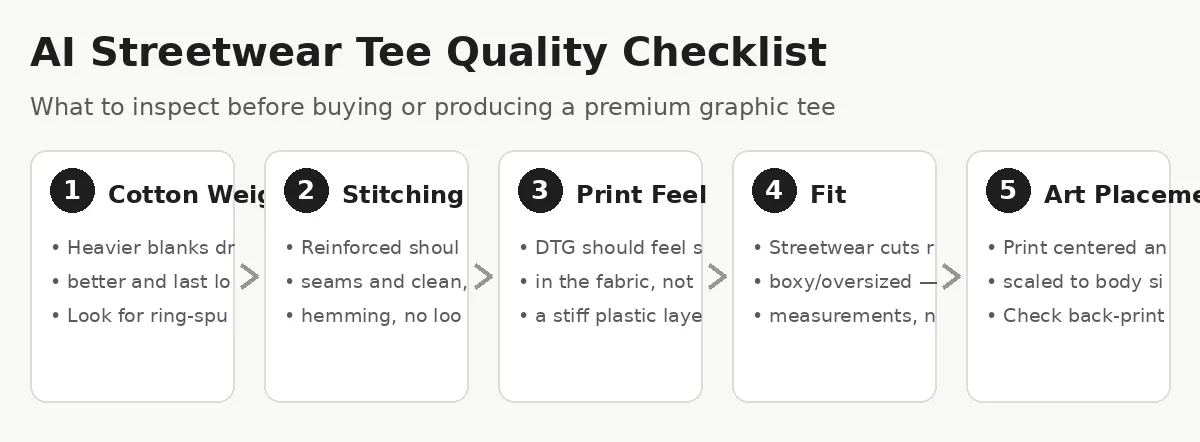
- Named blank or full fabric spec? Look for combed/ring-spun construction and a GSM or oz figure. Vague "premium cotton" with no spec is a red flag.
- Fit chart with garment measurements? Chest width and body length in inches/cm — not just S/M/L. Compare against a tee you already like.
- Print method stated? DTG for detailed art; be wary of listings that do not say how the design is applied.
- Mockup vs. real photo? Digital mockups can oversell color and placement. Real garment photos — or buyer review photos — are worth more.
- Care instructions listed? Cold wash inside-out and no high-heat drying should be standard for DTG prints.
- Return policy for printed goods? POD items are made to order; confirm what happens if the print arrives defective or the size is wrong.
Care: Keeping Prints and Cotton Alive
Premium cotton and DTG prints reward gentle treatment. Wash inside out in cold water with like colors; tumble dry low or hang dry — high heat is what kills prints and shrinks heavyweight cotton. Never iron directly on the graphic; iron inside-out or use a pressing cloth. Skip fabric softener on printed areas — it can break down the ink bond over time. Expect slight fading over the first few washes as loose surface ink releases; after that, a well-made print should stay vivid for years. A note on ethics: well-made heavyweight tees last longer, which is itself a sustainability argument — fewer replacements, less waste. Our eco-friendly printing guide digs deeper into responsible production.
Browse artist-designed graphic tees in our designs collection — real artwork on real blanks, with the fabric specs listed on each product page.
Frequently Asked Questions
What does GSM mean on a t-shirt listing?
GSM stands for grams per square meter — fabric weight. Standard tees are around 140–160 GSM; heavyweight streetwear blanks run roughly 200–240 GSM. Higher GSM means a thicker, more structured fabric with a premium feel.
Is ring-spun cotton better for graphic tees?
Yes. Ring-spinning produces a smoother, stronger yarn than standard carded cotton, giving a softer hand, a tighter weave, and sharper print reproduction — which matters for the fine detail in AI-generated artwork.
What print method is best for AI art on t-shirts?
DTG (direct-to-garment) is the best fit for detailed AI art on cotton: unlimited colors, smooth gradients, and a soft hand-feel. DTF works well for polyester blends and extra vibrancy on darks; screen printing suits bold, limited-color graphics and large runs.
How should an oversized streetwear tee fit?
Look for dropped shoulders, a wider body, and a length that falls below the hip — without the sleeves swallowing your hands. If buying a classic-fit blank, sizing up one size approximates the look; dedicated streetwear blanks are cut boxy from the start and keep better proportions.
Do AI-art t-shirts fade faster than regular graphic tees?
No — fading depends on the print method, ink, and care, not on whether the design was AI-generated. A DTG print of AI art lasts as long as a DTG print of any other design. Wash inside out in cold water and avoid high-heat drying to maximize print life.